A Term,
Planned
Ten weeks of art sessions in the order that actually builds skill, with the one thing you are teaching each week and the words to say while you teach it.
This is the sequence I run in my own studio. It is free to read, there is nothing to download first, and you can start it on Monday.
Read this first
The order is the whole thing
Most early years art programs are a list of themes. Autumn, then under the sea, then space. The children make something lovely each week and nothing they learn in week two makes week six easier.
This sequence is built the other way around. Each week depends on the one before it. By week nine a four year old can mix a colour nobody gave them, put a warm shape on a cool ground, and tell you why. None of that is possible in week one, and none of it happens by accident.
Weeks 1 to 2: the tool, before the picture
Weeks 3 to 4: shape, which is how drawing starts
Weeks 5 to 8: colour, one half of the wheel at a time
Week 9: putting it together
Week 10: take the scaffolding away and watch
One rule that runs through all ten weeks. No sample on the wall. Ever. The moment a child can see the intended outcome, the task stops being have an idea and becomes match the educator's idea. Those are different skills, and only one of them is worth a ninety minute session.
From Valando
That's one term. Want every term after it?
The Method teaches you why the order works, the sentences that do the teaching and how to plan a term from scratch, so you never need Pinterest on a Sunday night.
Week 1
Mark makers
Meeting the tool, not making a picture
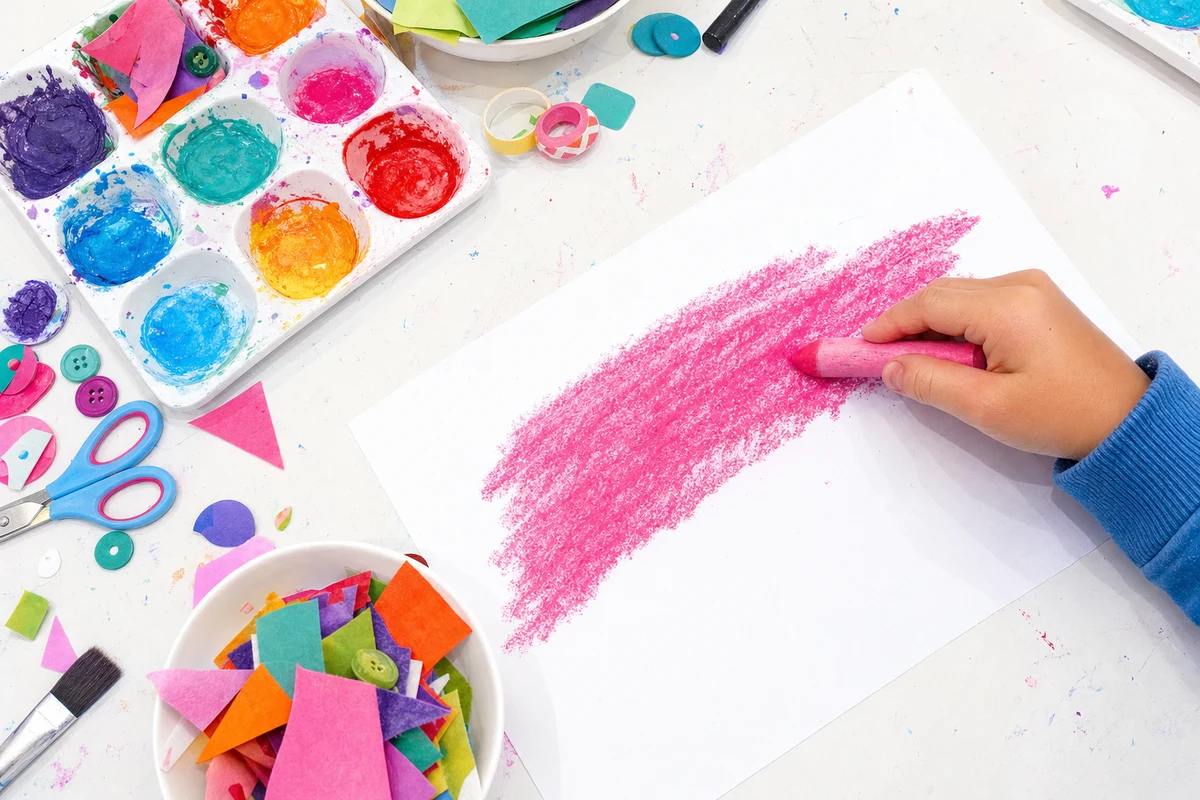
Thick pencils, one colour. Big paper. Nothing else on the table.
Every mark a tool can make before anybody asks it to make a thing. Press hard, press soft, drag it on its side, stand it up, scribble, stop.
Show me the quietest mark that pencil can make.
Now the loudest one.
Mostly scribble, and that is the correct outcome. Watch for the child who turns the pencil over to try the side. Name it out loud so the table hears.
Do not. Do not put a sample up. Week one sets whether this room is about copying or about trying, and they decide that in the first ten minutes of the term.
Week 2
Lines that mean something
A line can be fast, slow, angry, sleepy
The same pencils, plus one brush and black paint.
Lines carry feeling. You call a word, they draw the line. Then they name a line for you to draw.
Draw me a line that is in a hurry.
Draw me a line that is nearly asleep.
You two did that completely differently. Both of them are right.
They will copy each other for the first three words and then split off. The copying is not cheating, it is how they check the rules.
Do not. Do not correct a line. There is no wrong answer to a sleepy line, and if you give one, nobody risks anything in week three.
Week 3
The shape family
Circle, square, triangle, and the mess in between
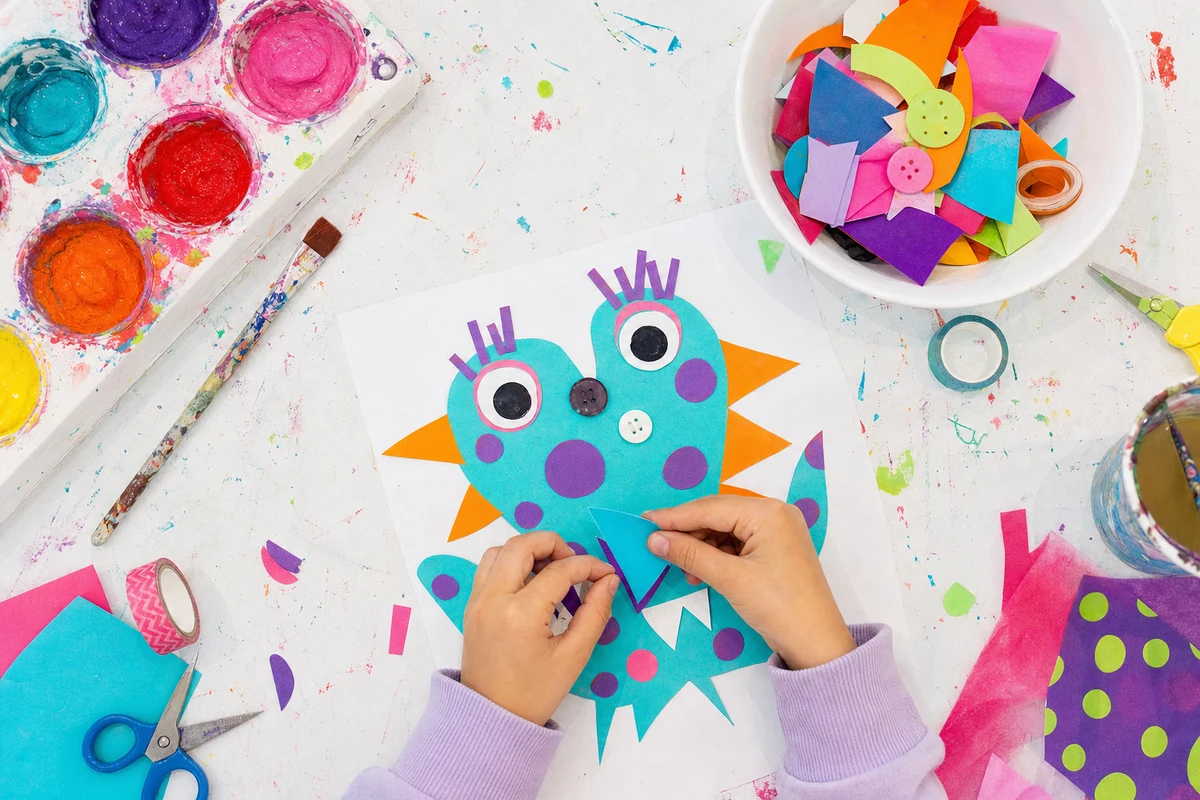
Paper shapes you have cut, a glue stick, and one big sheet each.
Shapes as objects you can hold and move, not outlines you have to draw. This week is the only week you hand out something pre-cut.
You can move them around as much as you like before you stick anything.
Which one does not want to be next to the others?
Sorting before sticking. Lines of shapes, piles by colour, one child who turns the square to make a diamond and is extremely pleased about it.
Do not. Do not say what the shapes should become. The moment you say house, you get twelve houses.
Week 4
Building with shapes
Everything is made of the shapes you already know
Their own shapes this time, cut by them, plus the brush and paint.
That a dog is a circle, two triangles and some lines. This is the week the drawing changes, and parents notice it at home.
A cat is just shapes sitting next to each other. Which shape is the head?
Start with the biggest shape and the rest gets easier.
The first recognisable drawings of the term from the four and five year olds. Threes will still be exploring, which is correct for threes.
Do not. Do not draw it for them, not even one shape on the corner of the page. Ask which shape goes down first and wait.
Week 5
Warm colours
Red, orange, yellow, and the feeling they carry
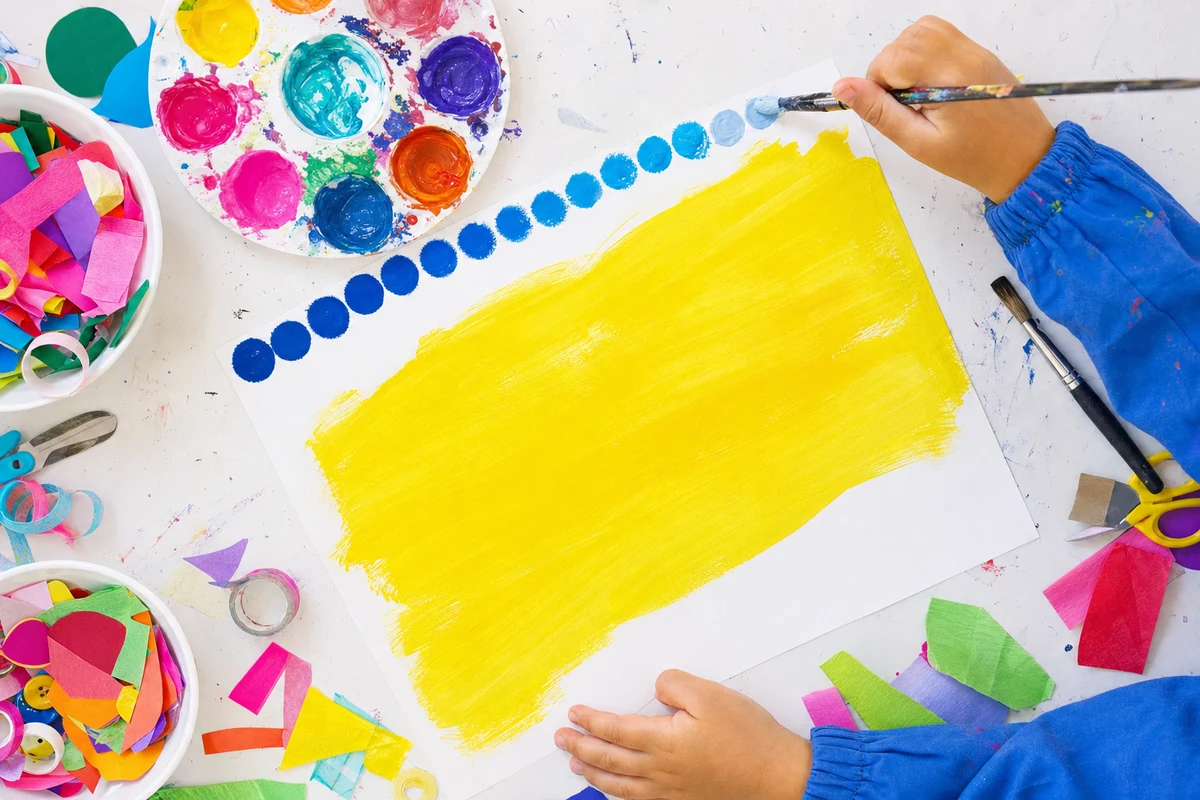
Red, yellow and white paint. No blue on the table at all.
Colour has temperature. Warm colours come forward, they feel like heat, like noise, like being close.
There is no blue today. Everything on your page has to be warm.
Where would you stand if the page was real? Close or far?
Somebody will ask for blue within four minutes. Hold the line, kindly, and the work gets better because of the limit.
Do not. Do not add blue because one child is upset about it. The constraint is the lesson.
Week 6
Mixing warm
You can make a colour nobody gave you
Red, yellow, white. One brush. A palette or a plate each.
Mixing. Red and yellow make orange, and more white makes it quieter. This is the single most useful skill in the whole term.
Make me a colour I have not given you.
Make the same orange twice. Can you remember what you did?
Total absorption, then brown. Everything goes brown eventually because they mix everything into everything. Let it. Then show the rinse.
Do not. Do not hand out a pre-mixed orange. If orange arrives in a pot, the thinking never happens.
Week 7
Cool colours
Blue, green, purple, and the distance they make
Blue, white, and a little green. No red or yellow.
The opposite half of the wheel, and that cool colours move away from you while warm ones come towards you.
Last time everything was close. Make this one feel far away.
Add more white and look what happens to the distance.
Calmer work and a quieter table. This is reliably the most settled session of the term, and that is not a coincidence.
Do not. Do not describe it as the sad colours. You will get ten grey pages and a conversation you did not want.
Week 8
Mixing cool
Blue has more versions than you think
Blue, white, green, and black used sparingly.
That one colour contains dozens. Making ten different blues and putting them in order from lightest to darkest.
Make ten blues and line them up, lightest at that end.
Which two are hardest to tell apart?
A proper gradient from the fives, a muddle from the threes, and real argument about which blue goes where. The argument is the learning.
Do not. Do not let black in early. One drop turns every blue into the same blue and the exercise collapses.
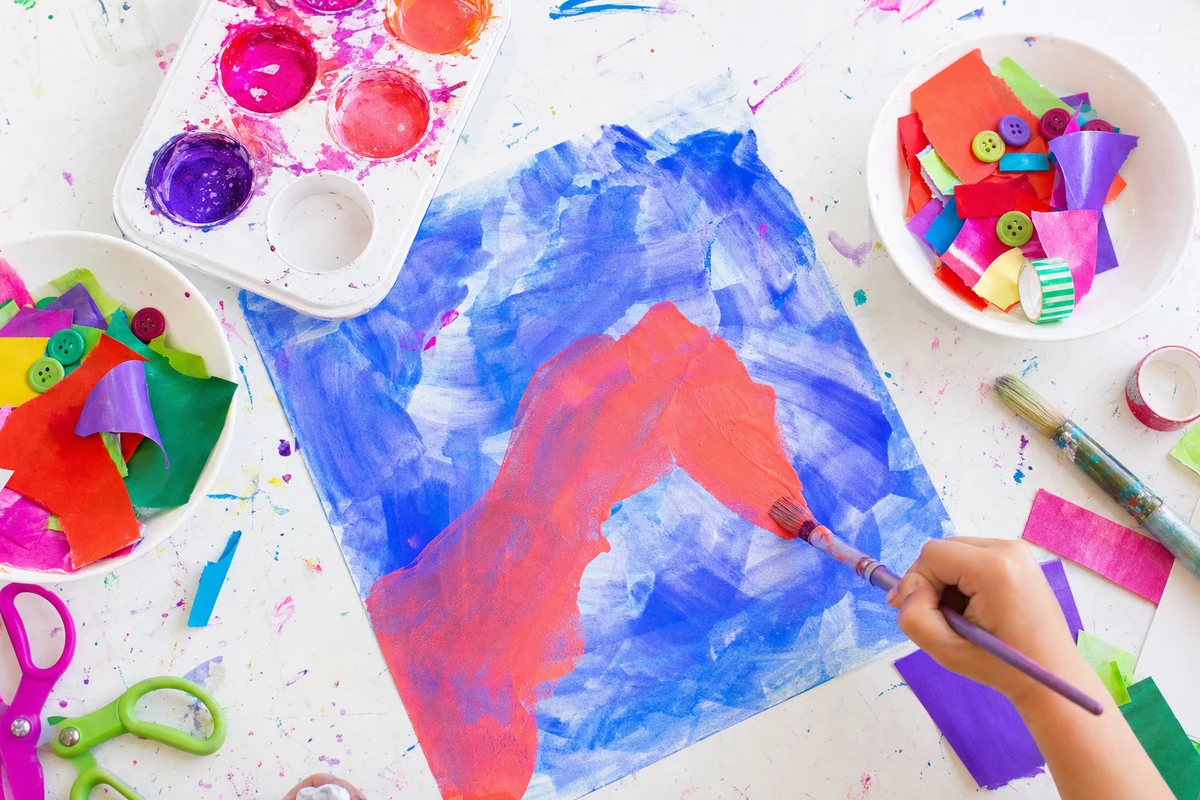
Week 9
Warm against cool
Two halves of the wheel in one picture
Everything. Red, yellow, blue, white, and their own brushes.
Contrast. A warm shape on a cool background jumps off the page, and they can now make that happen deliberately.
Put something warm on top of something cool and watch it come forward.
You have done eight weeks of this. You already know how to mix that.
The strongest work of the term, by a wide margin, and children reaching for colours without asking permission first.
Do not. Do not introduce anything new this week. The pay off only lands if the materials are already familiar.
Week 10
Their own
You choose. All of it.
Every material they have met this term, out on the table at once.
Nothing new. This week is the assessment, and it does not look like one.
You know all of these. Pick what you need.
Tell me why you chose that one.
Children going straight to a specific material with a reason. That is the whole term showing up, and it is the only evidence you need that it worked.
Do not. Do not set a theme. An open week with no theme is the only way to see what they actually learned, as opposed to what they complied with.
The hard part
Running it with threes and fives at the same table
You do not change the activity. You change what you expect back.
Threes
Same material, same words, no outcome. A three year old doing week six will mix brown and be thrilled. That is week six working. Do not ask for orange twice, ask them to make one colour and look at it.
Fours
This is the age the sequence is built for. Give the full instruction and then get out of the way.
Fives and sixes
Add one constraint. Make ten blues, not three. Make the same orange twice from memory. Use only the side of the pastel. The constraint is where the challenge lives, not a harder activity.
“You have done this before, so I am going to make it harder.”
Said to a five year old at a table of threes, it turns an age gap into a promotion instead of a problem.
Copy this
Four lines, and your week is planned
This is the entire planning document. If it takes longer than four lines, you are planning a theme instead of a skill.
The one thing: _______________
On the table: _______________
I will say: _______________
I will not: _______________
Why the fourth line matters most. Every educator I have worked alongside can fill in the first three. The fourth one, writing down in advance the thing you are not going to do, is what stops you drawing on a child's page at 10:40 on a Tuesday when they ask you to and you are tired. Decide it on Sunday, not in the moment.
After week 10
Where the next ten weeks come from
You run it again. Not the same weeks, the same shape: tool, then shape, then colour, then combine, then open. Second time through, the material changes and the sequence does not. Clay instead of paper. Charcoal instead of pencil. Printing instead of collage.
That is the part nobody hands you, because it is not a list of activities. It is knowing why week six has to come after week five, and being able to build week eleven yourself instead of looking for it on Pinterest at nine on a Sunday night.
From Valando
That's one term. Want every term after it?
The Method teaches you why the order works, the sentences that do the teaching and how to plan a term from scratch, so you never need Pinterest on a Sunday night.
Take the next step
Ready for the whole thing?
This guide gives you the ideas. The courses teach you how to run them, step by step, so it works on a real Tuesday.
The Method
$999 or $1,499 for your whole site
- Calm, confident art with three to six year olds
- Set-up, materials and the words to use, taught step by step
- 7-day money-back guarantee
The Kitchen Table Method
$139 once, yours for life
- Short audio lessons in my voice, to listen to while dinner cooks
- A ready-to-go activity and printable card for every session
- The exact words to say when it gets hard
I'm a qualified teacher. I studied teaching at Flinders University and taught in a primary school, from reception to year two, for about eight years. I now run an art studio for 3 to 6 year olds in Adelaide, I've written my own teaching method, and I'm a mum of three girls. Everything here is what I actually do, not theory.