Six
Saturdays
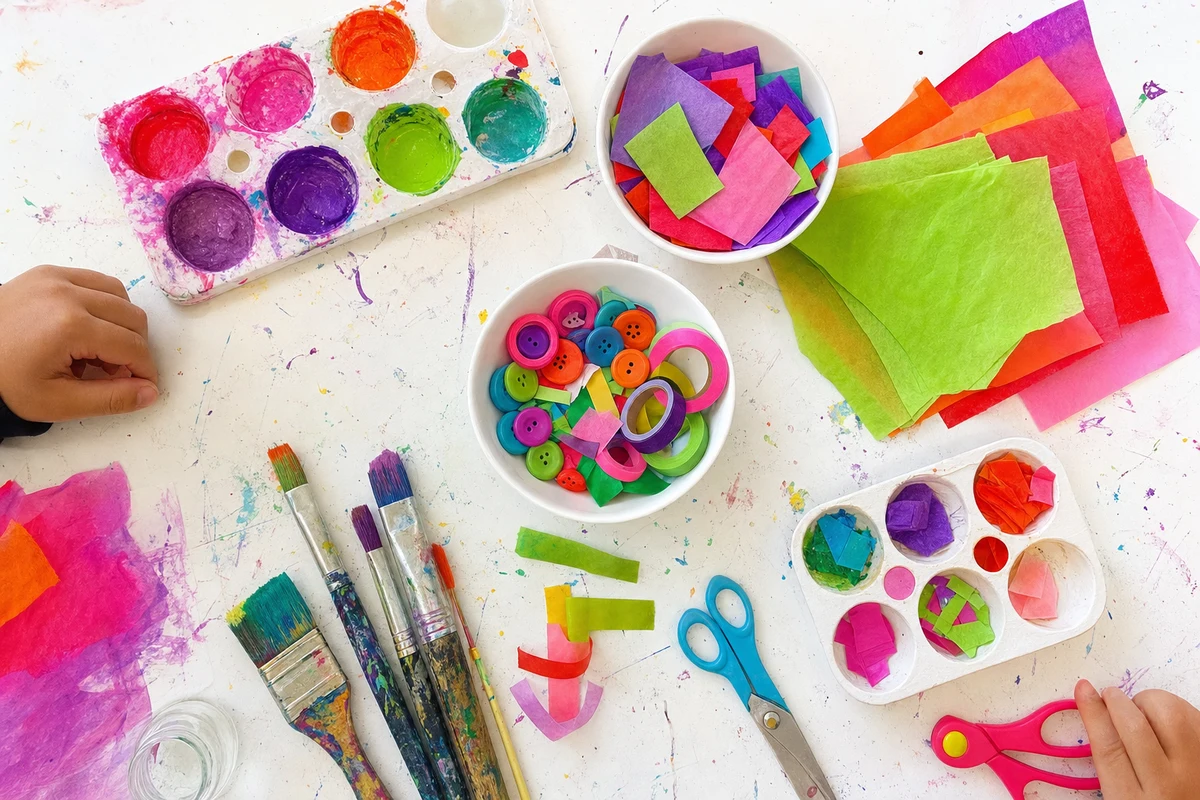
Six weekends, one activity each, in the order that makes your child visibly better at the next one. Forty minutes a week and about twenty dollars for the lot.
Not six nice afternoons. A sequence, where week two only works because of week one. Free to read, nothing to sign up for.
Read this first
Six activities in a row beats sixty saved to a folder
Most of what gets shared with parents is a list. Sixty ideas, no order, every one of them a standalone afternoon. You do three, they are lovely, and nothing you did in the first one makes the third one easier.
These six are in an order. Week one is one tool and nothing else, because a child who has not met a tool cannot make a decision with it. By week six they can mix a colour nobody gave them, decide what to build before they build it, and tell you why they chose a material. In six Saturdays. With a crayon, some paint and the recycling bin.
One material, not five. A tray of options is a decision they cannot make yet.
No sample, ever. If they can see what it should look like, the job changes from having an idea to matching yours.
Say nothing for the first ten minutes. Hardest rule here. Changes the most.
If you miss a week. Pick up where you left off rather than skipping ahead. The order is doing the work, not the calendar.
From Valando
Six Saturdays is the start. Want every week?
The Kitchen Table Method gives you short audio lessons and a ready-to-go activity for every session, so you never run out of ideas.
Saturday 1
Marks
One tool, every mark it can make
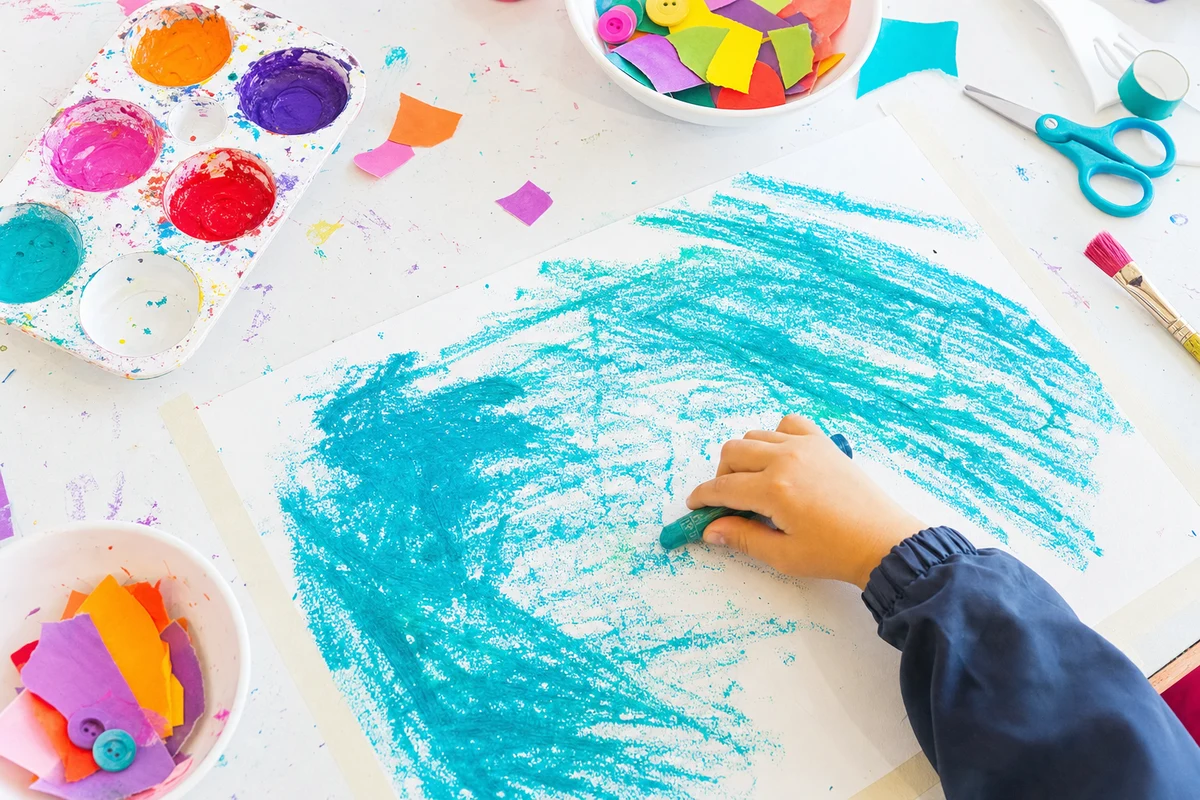
A thick pencil or a crayon, one colour, and the biggest piece of paper in the house. Tape it down.
Do not ask for a picture. Ask for marks. Loud ones, quiet ones, fast, slow, dots, drags, the side of the crayon.
Show me the quietest mark that can make.
Now the loudest one.
Do one I have not seen yet.
Scribble, and then, somewhere around the eight minute mark, a child who turns the crayon on its side without being told. That is the whole point of week one.
Saturday 2
Colour
Making a colour nobody gave you
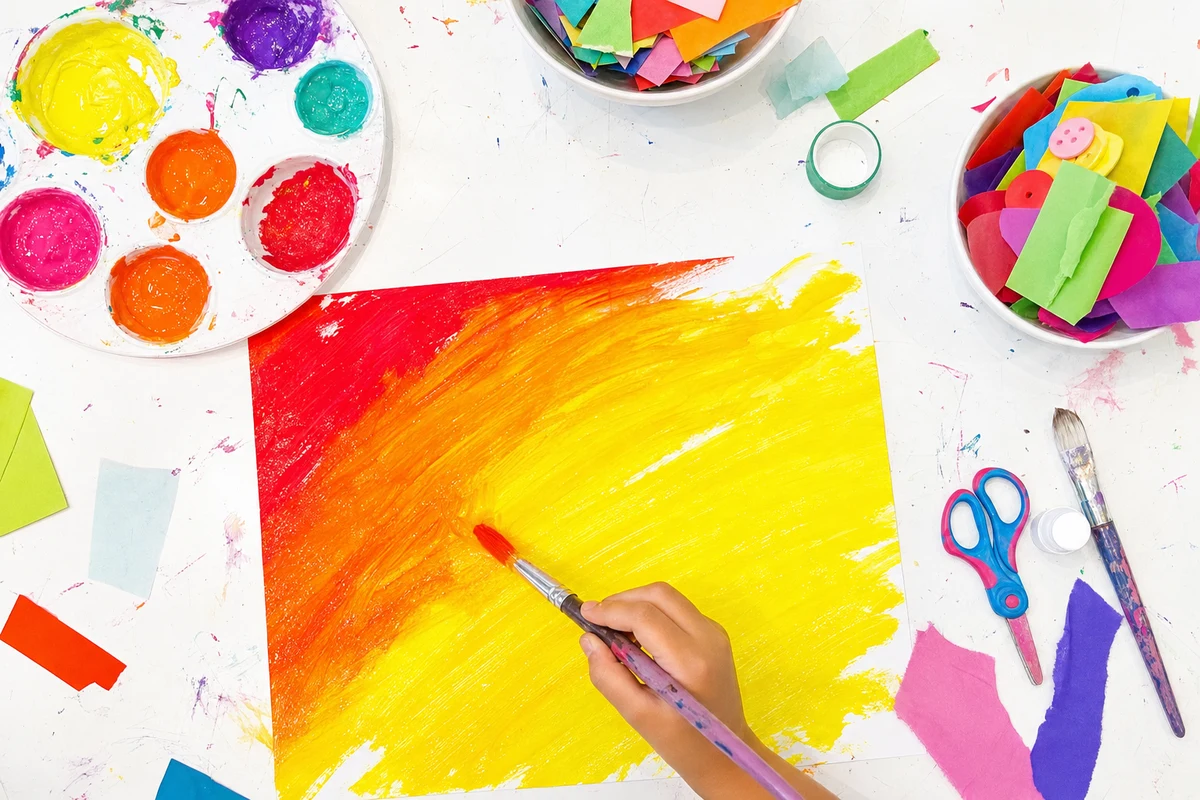
Red, yellow and white paint. Three small pots and a plate each to mix on. No blue anywhere.
Mixing, which is the single most useful thing in this whole guide. Red and yellow make orange, white makes it quieter.
Make me a colour I have not given you.
Can you make that same orange again? What did you do the first time?
There is no blue today. Everything has to be warm.
Deep concentration, then brown. Everything goes brown eventually because they mix everything into everything. That is not failure, it is thoroughness.
Saturday 3
Texture
The page does not have to be smooth
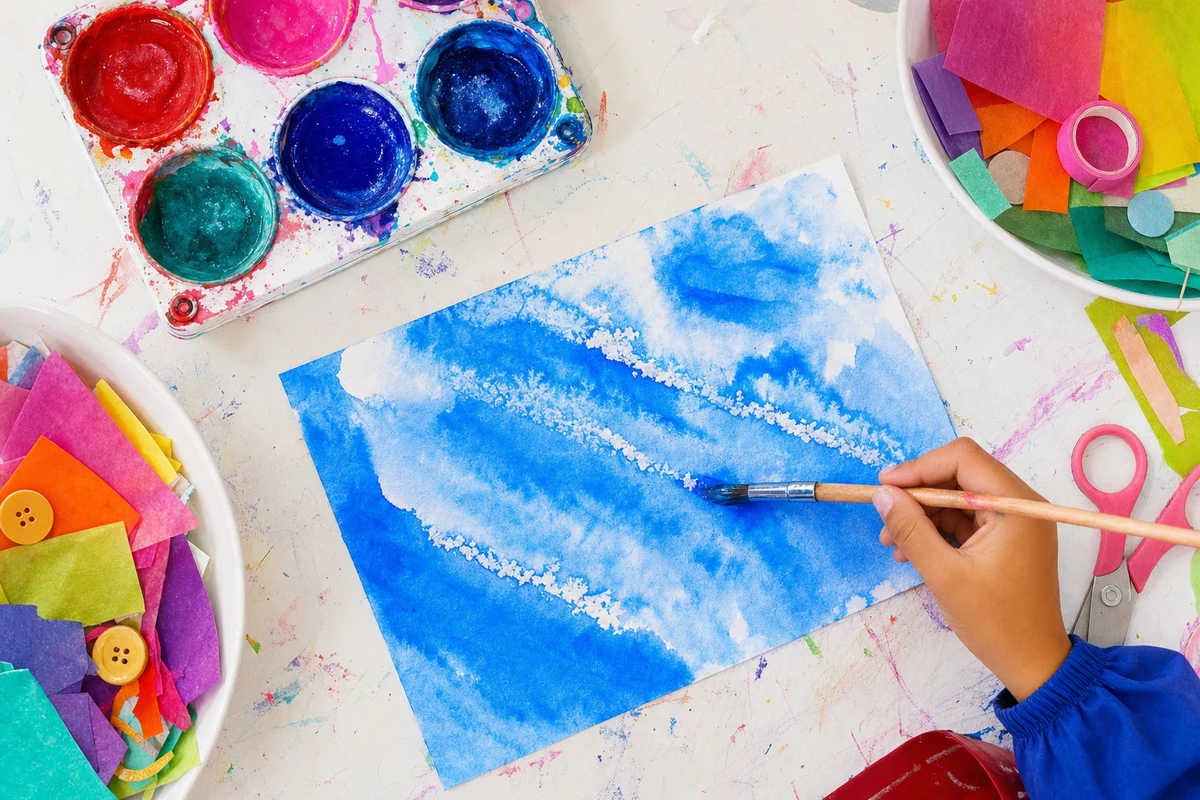
PVA glue, table salt, a cheap watercolour tin, one brush, and thick paper or a cereal box opened flat.
That a surface can be built, not just coloured. They draw with the glue, tip salt over the whole thing, shake the loose salt off, then touch a loaded brush to the salt line.
The good bit does not happen straight away.
Watch where the colour goes.
Nothing for about ninety seconds and then the colour runs along the line on its own and the room goes quiet. This is the one they remember.
Saturday 4
Build
Deciding first, then making
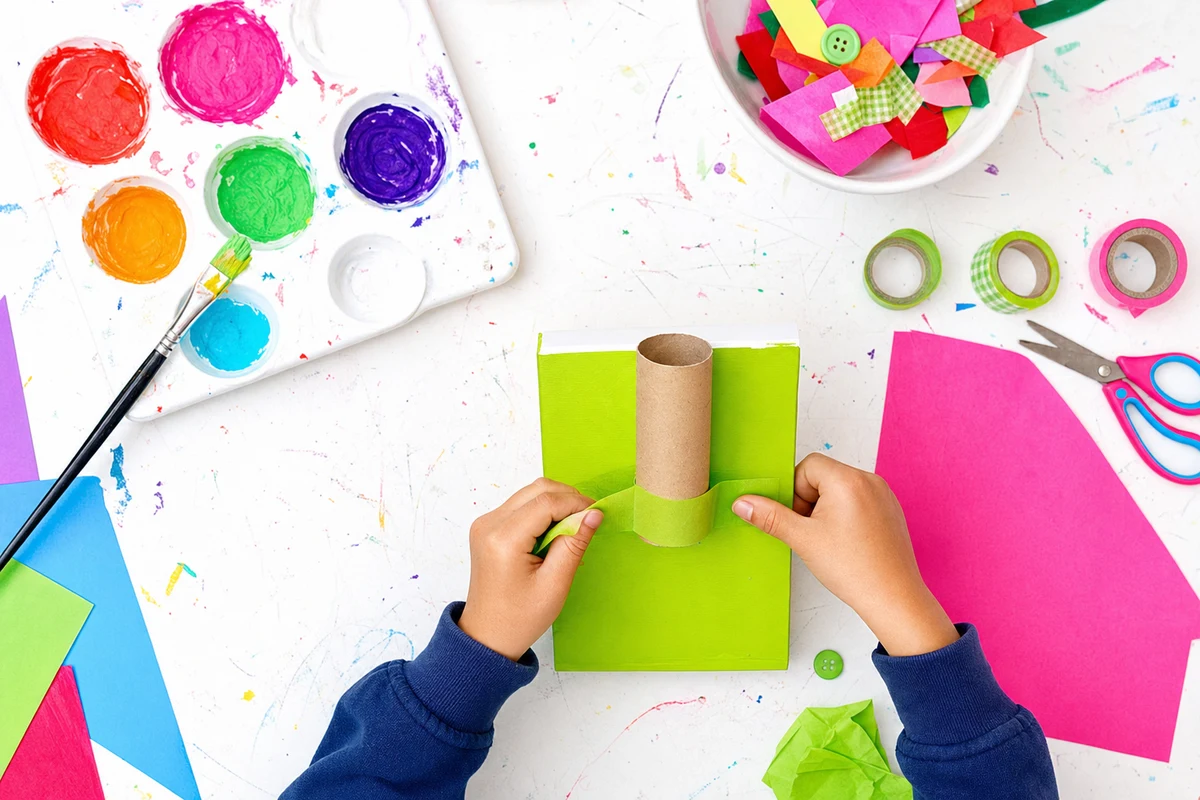
The recycling bin, tipped out and not sorted. Masking tape. That is genuinely all.
Planning. Ask what they want to make before they touch anything, and then let them fail at sticking a tube to a box for a while before you offer help.
What are you going to make?
That is the hard bit. What else could hold it up?
You can change your mind, but tell me the new plan.
Frustration around minute twelve, when the thing falls over. Do not fix it. Ask what else could hold it up and sit back down.
Saturday 5
Outside
Making something that is not meant to last
Nothing at all. A garden, a park, a footpath, and your phone for a photo.
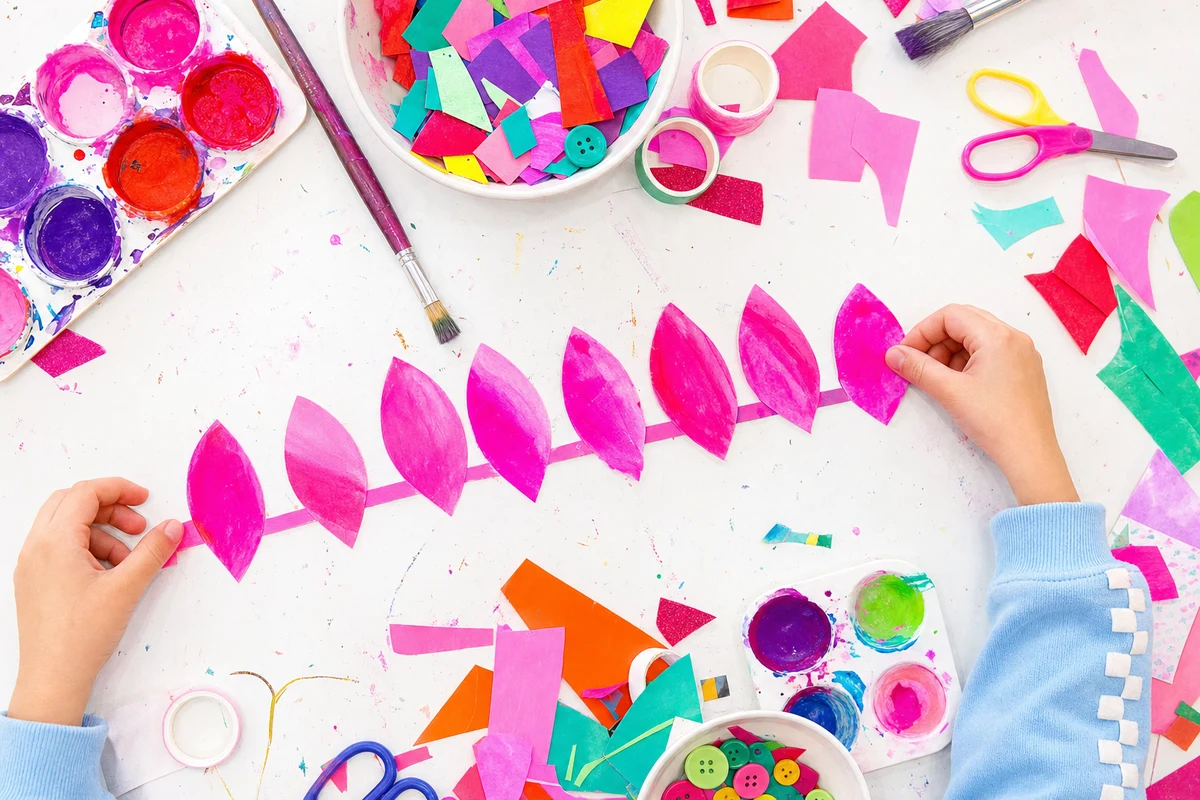
Composition. Collect, then arrange on the ground. Leaves in order of size, stones in a spiral, sticks from longest to shortest.
We are not taking it home. We will take a picture of it.
What order are you putting them in?
Who else gets to see it before the wind does?
A better arrangement than you expect, and a genuine conversation about whether it matters that it will blow away. Four year olds have real opinions about this.
Saturday 6
Together
One page, two people, and you are not in charge of it
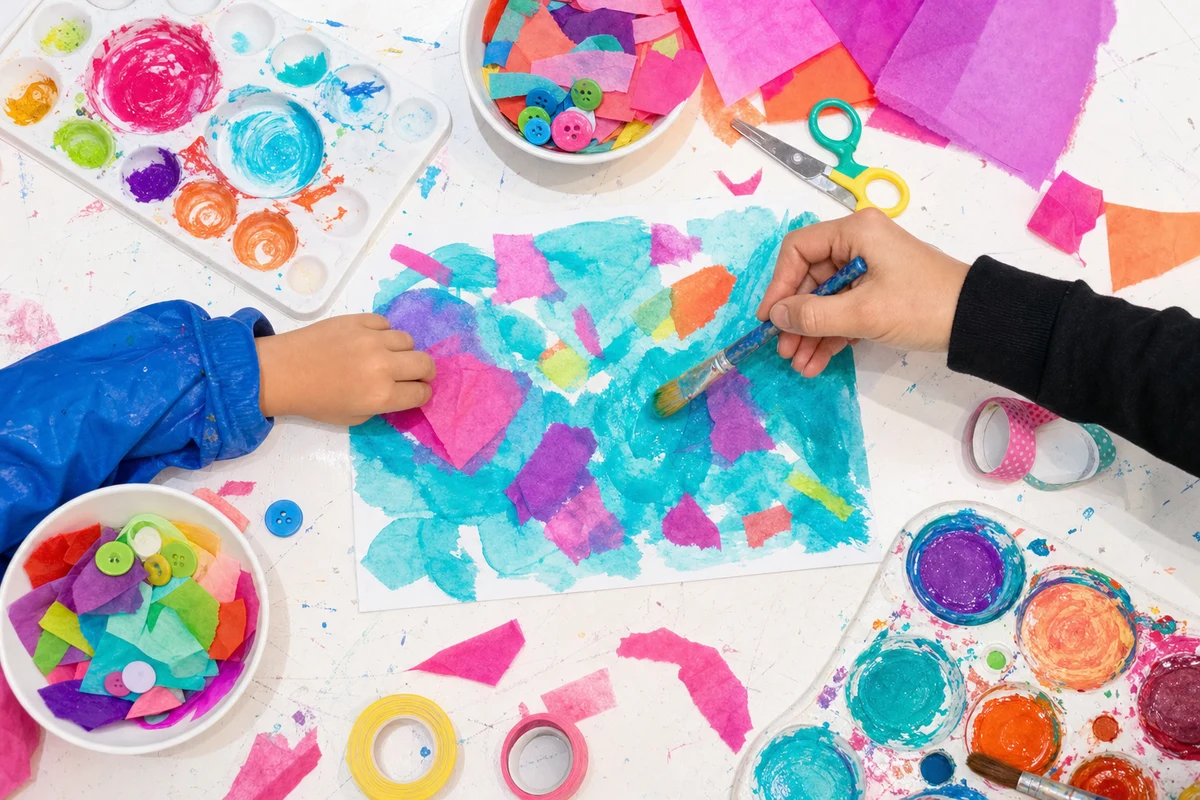
One big sheet, everything you have used over the five weeks, and you sitting down with your own half.
Nothing new. You make your own work beside them, badly, and out loud. This is the week they see an adult find something hard and keep going anyway.
I am going to try the thing I am worst at.
That bit did not work. I am going to leave it and see what happens.
You choose what we do. All of it.
Them telling you what to do, and being right. Also, if you have run the five weeks, a child reaching straight for a specific material with a reason, which is the only evidence you need.
When it goes wrong
Four of these will happen in six weeks
None of them mean it is not working.
“I can’t do it.”
Do not say yes you can. They have told you what they believe about themselves and you have told them they are wrong. Say “you can't do it yet”, then draw something badly yourself and be delighted about it.
They finish in four minutes.
You gave them a finish line. Take the example away, including the one you described out loud, and there is nothing to be finished with.
They ask you to draw it.
Never draw for a child. Ask which bit is the hard bit, and start there, on their paper, with their hand doing it.
They will not start at all.
Somebody corrected them at some point, and it is usually not you. Put the material out, say nothing for ten minutes, and do your own. Three weeks of that undoes most of it.
After the six
You run it again, with different materials
Not the same six weeks. The same shape. One tool and all its marks. Then colour and mixing. Then texture. Then building, with a plan first. Then outside. Then an open week where they choose.
Second time through, swap the materials and keep the order. Chalk instead of crayon. Clay instead of a box. Once you can see the shape, you stop needing somebody to hand you a list, which is the actual point of all of this.
From Valando
Six Saturdays is the start. Want every week?
The Kitchen Table Method gives you short audio lessons and a ready-to-go activity for every session, so you never run out of ideas.
Take the next step
Ready for the whole thing?
This guide gives you the ideas. The courses teach you how to run them, step by step, so it works on a real Tuesday.
The Kitchen Table Method
$139 once, yours for life
- Short audio lessons in my voice, to listen to while dinner cooks
- A ready-to-go activity and printable card for every session
- The exact words to say when it gets hard
The Method
$999 or $1,499 for your whole site
- Calm, confident art with three to six year olds
- Set-up, materials and the words to use, taught step by step
- 7-day money-back guarantee
I'm a qualified teacher. I studied teaching at Flinders University and taught in a primary school, from reception to year two, for about eight years. I now run an art studio for 3 to 6 year olds in Adelaide, I've written my own teaching method, and I'm a mum of three girls. Everything here is what I actually do, not theory.