The Material
Cards
Seven materials, and for each one: the story I tell the children, how to hold it, use it, care for it and put it away, and the words that keep it going. This is how I teach them in the Method.
Print them, put them in the cupboard, and any educator or relief staff member can run the table the way you would. Free to read, nothing to download first.
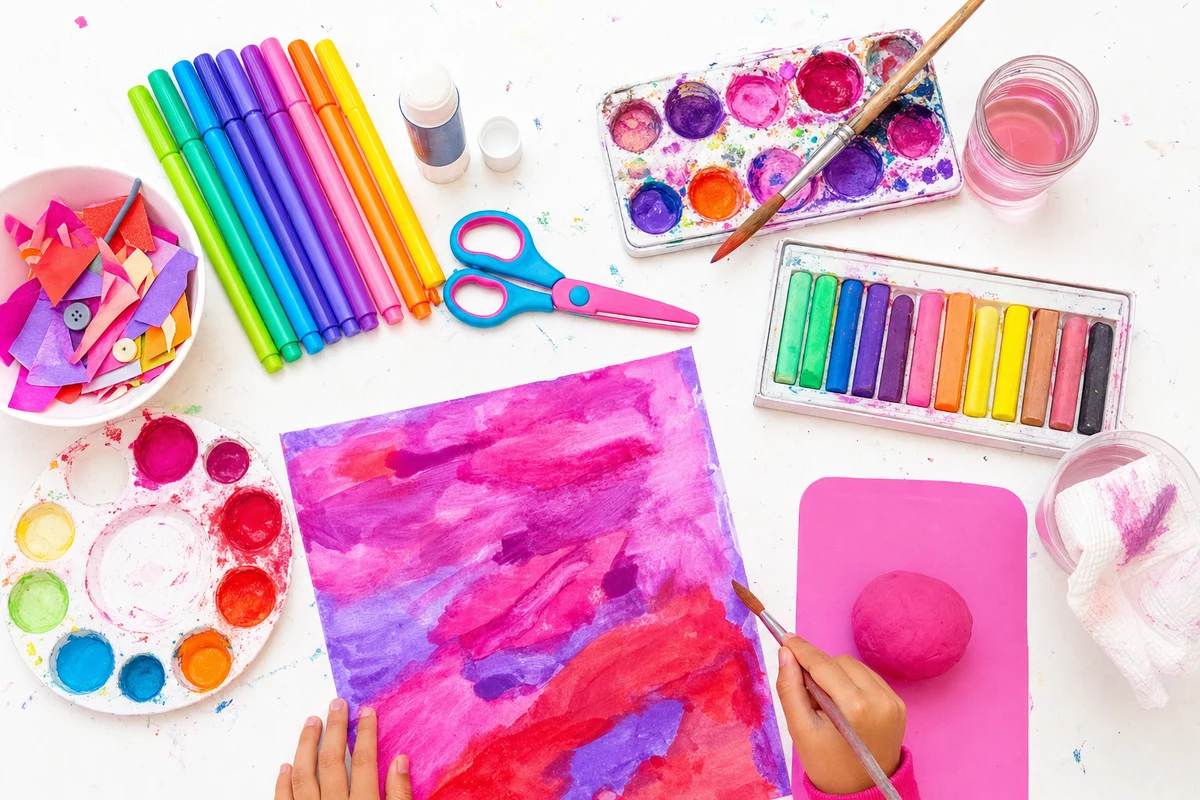
Read this first
A material a child has not been introduced to is just a mess waiting to happen
How you introduce a material decides how the next hour goes. Rush it and you spend the lesson putting out fires. Teach it slowly, like storytime, and a room of three year olds will handle real brushes, real scissors and real glue with astonishing care.
Almost every “behaviour problem” at the art table is really a child who was handed a powerful tool with no story and no boundary. A child who believes the scissors are a crocodile that only bites paper is not going to cut their friend's hair. They are looking after their crocodile.
How to hold it: show the exact grip, slowly, up high
How to use it: one move, and only that move
How to care for it: the story earns its keep here
How to put it away: teach the ending before they start
The mistake most people make. Handing out the material while you are still talking. The moment it is in their hands, they stop listening. That is not naughtiness, it is how a young brain works. Teach the material fully before a single one is handed out.
From Valando
Want the whole system behind the cards?
The Method teaches you how to set up, how to introduce every material and the words to use, so any educator can run a calm table.
Card 01
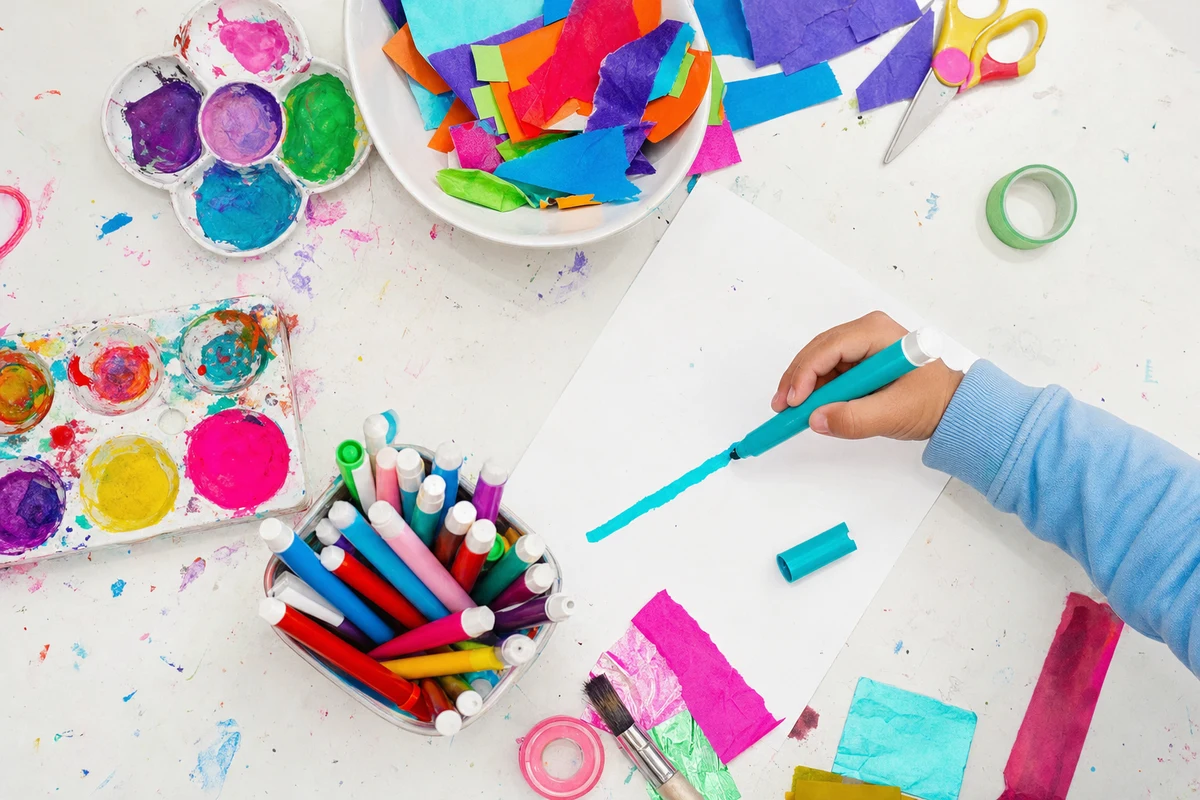
The texta
Every texta wears a lid, and the lid is its medicine
The lid goes back on, every time.
Every texta wears a lid, and the lid is its medicine. If a texta loses its lid it gets sick and dries up, so we keep the medicine safe.
Lid off slowly, up high where everyone can see. Then click it onto the back so it can never roll away.
When we finish, the lid goes back on so the texta can have a good sleep.
Lid off slowly. Up high.
Click it onto the back so it cannot roll away.
The texta needs its medicine.
Goes wrong: a capless texta. Fix: make it cough and splutter, pop the lid back on, and it is all better.
Card 02
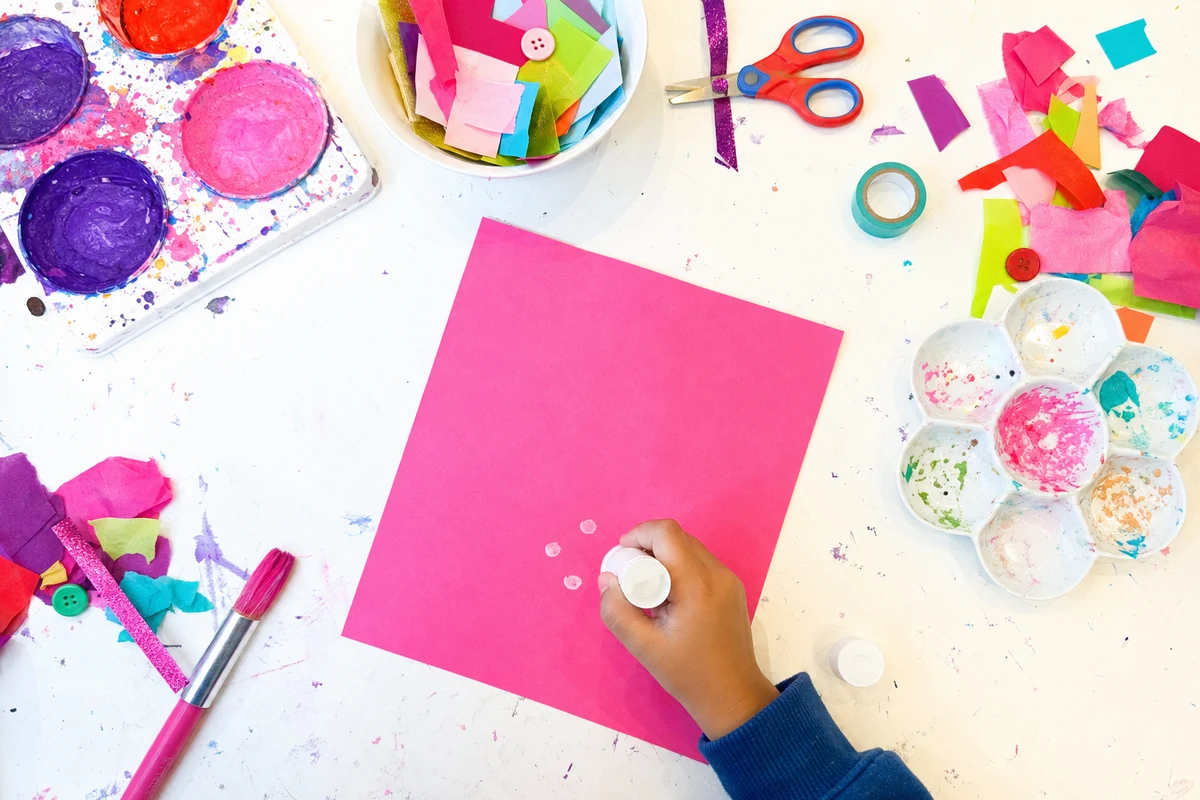
The glue stick
Looks like the safe one, teaches the least, unless you tell its story
The hat goes back on.
The lid is the glue stick's hat. We take it off and pop it right next to us so it cannot roll away.
Twist up just a little. Dot, dot, not a lot.
When we finish, the hat goes straight back on so the glue does not dry out.
Hat off, pop it next to you.
Twist up just a little.
Dot, dot, not a lot.
Goes wrong: a quarter of the stick is gone in one session, because twisting is more satisfying than gluing. Fix: twist it down to almost nothing before you hand it over.
Card 03
Scissors
A little crocodile that only ever bites paper
He only ever bites paper.
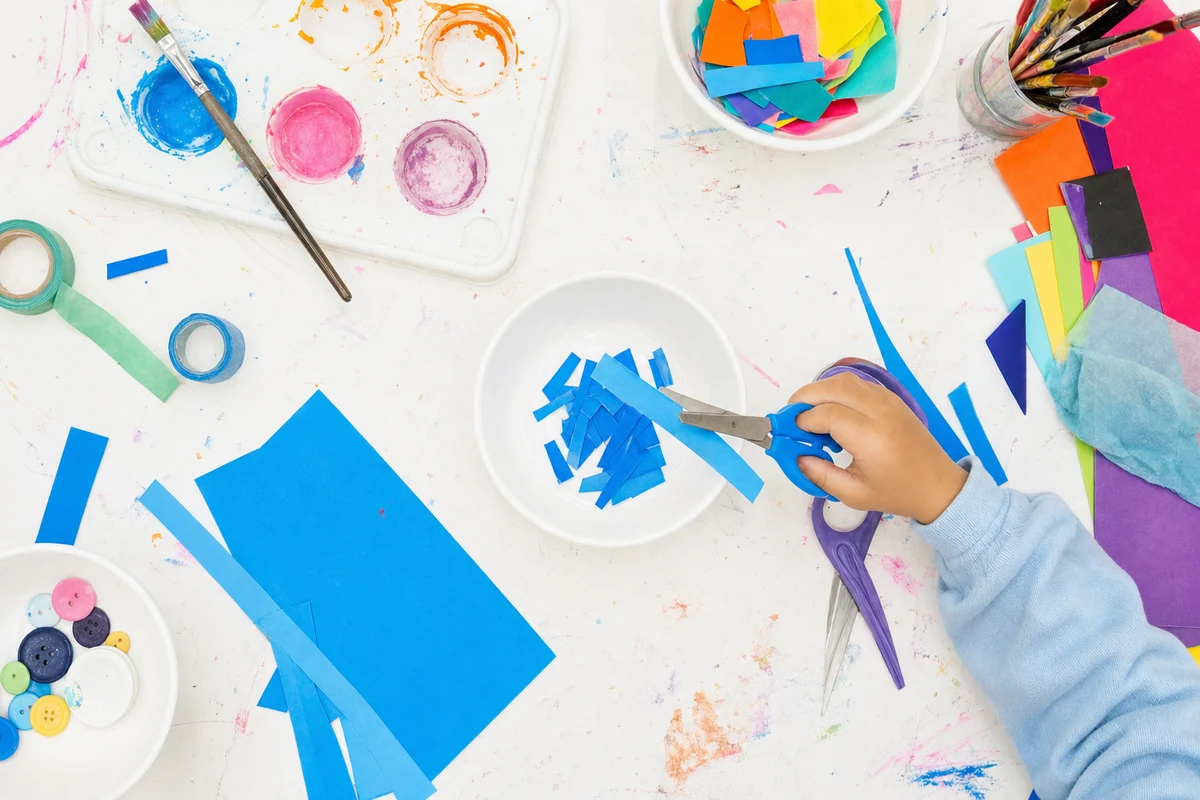
Scissors are a little crocodile. He only ever bites paper. Open, snap, open, snap.
Thumb in the small hole, fingers in the big one. Have every child show you the grip in the air before a single pair is handed out.
Walking anywhere? The crocodile goes to sleep, blades shut, pointing at the floor.
Thumb in the small hole, fingers in the big one.
Open, snap, open, snap.
Crocodile only bites paper.
When scissors are misused: calmly, “The crocodile needs a sleep.” Blades shut, scissors rest on the table. After one calm minute: “Crocodile's awake. Paper only.” No lecture. For the youngest: snip thin strips of card into “crocodile food”, one snip and the piece drops into a bowl.
Card 04
The brush and watercolour
Your brush is a ballerina, and she has been asleep
Keep her tip pointy.
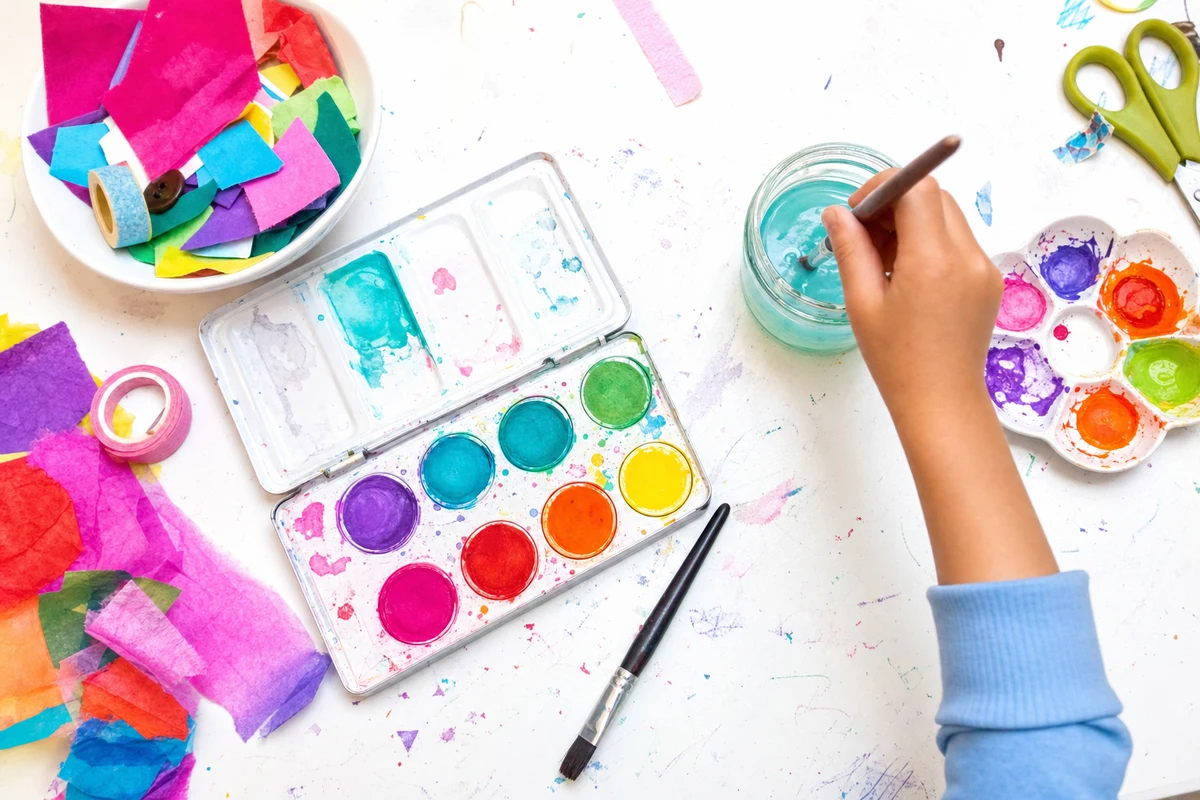
Your brush is a ballerina, and she has been asleep. First we wake her up, dip her toes in the water and give her a swirl. Now she chooses a colour, and swirls her feet in it five times. See her fine pointy tip? We keep her pointy and never smush her flat, or she cannot dance.
Swirl her feet in the colour five times, counting out loud: one, two, three, four, five. Let the children name her.
When she gets tired and the colour goes muddy, back into the water for a wash, and she is ready again.
Wake her up first. Dip her toes and swirl.
Swirl her feet in the colour five times.
Keep her tip pointy.
Goes wrong: the paper floods. Fix: “Wipe her toes on the edge of the pot.” The brush is squashed flat? “She's doing the splits. Stand her back up on her pointy toes.”
Card 05
Oil pastels
Little sticks of butter that melt colour onto the page
Hold it near the tip, gently, like a tiny bird.
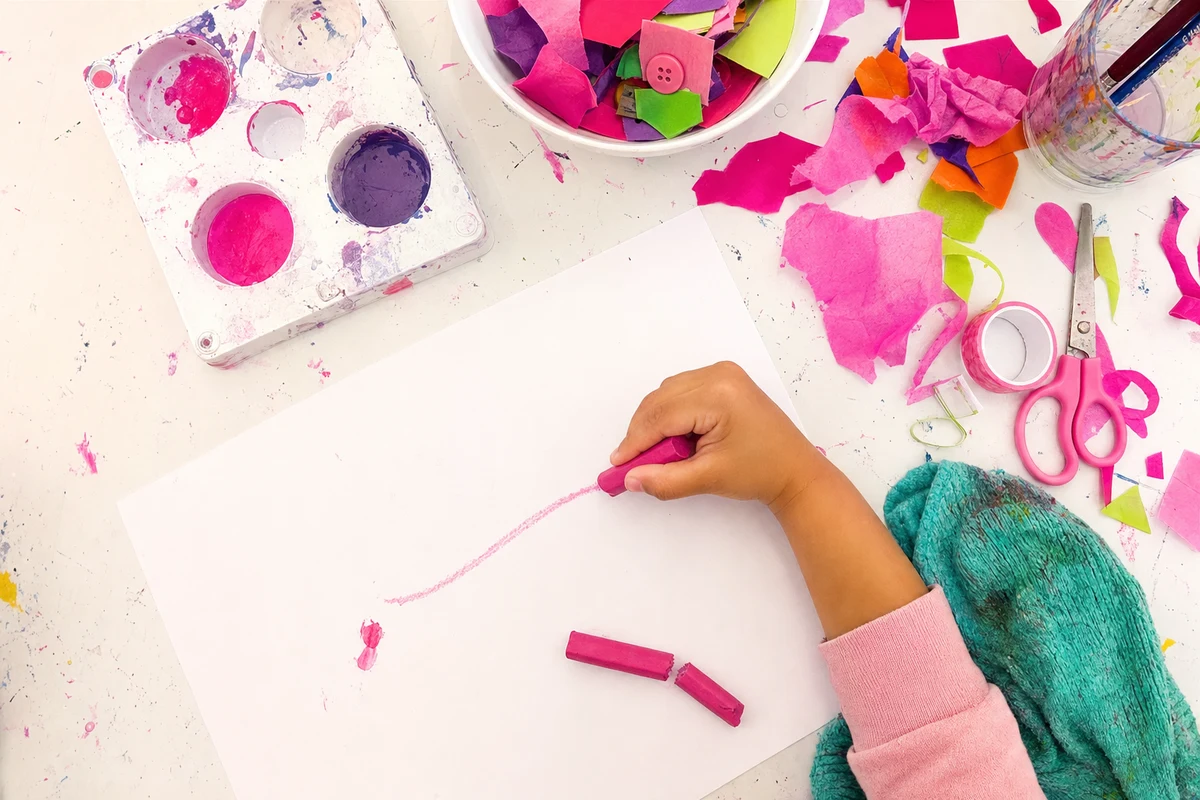
Oil pastels are like little sticks of butter that melt colour onto the page. We hold them gently, because if we squeeze too hard they snap.
Press soft for a quiet colour, a little firmer for a loud one.
If one does snap, it is not broken. Now there are two. Wipe colourful fingers on the cloth, not on your clothes.
Each one goes back to bed in its own little spot in the box so it can find its colour again tomorrow.
Hold it near the tip, like a tiny bird.
Soft for a quiet colour, firmer for a loud one.
Now there are two.
Tell them the truth first: “These make our hands smudgy, and that is okay.” A smudge is part of the play, never a mistake.
Card 06
Playdough and clay
The dough is asleep and cold, so we wake it up
The dough lives on the mat.
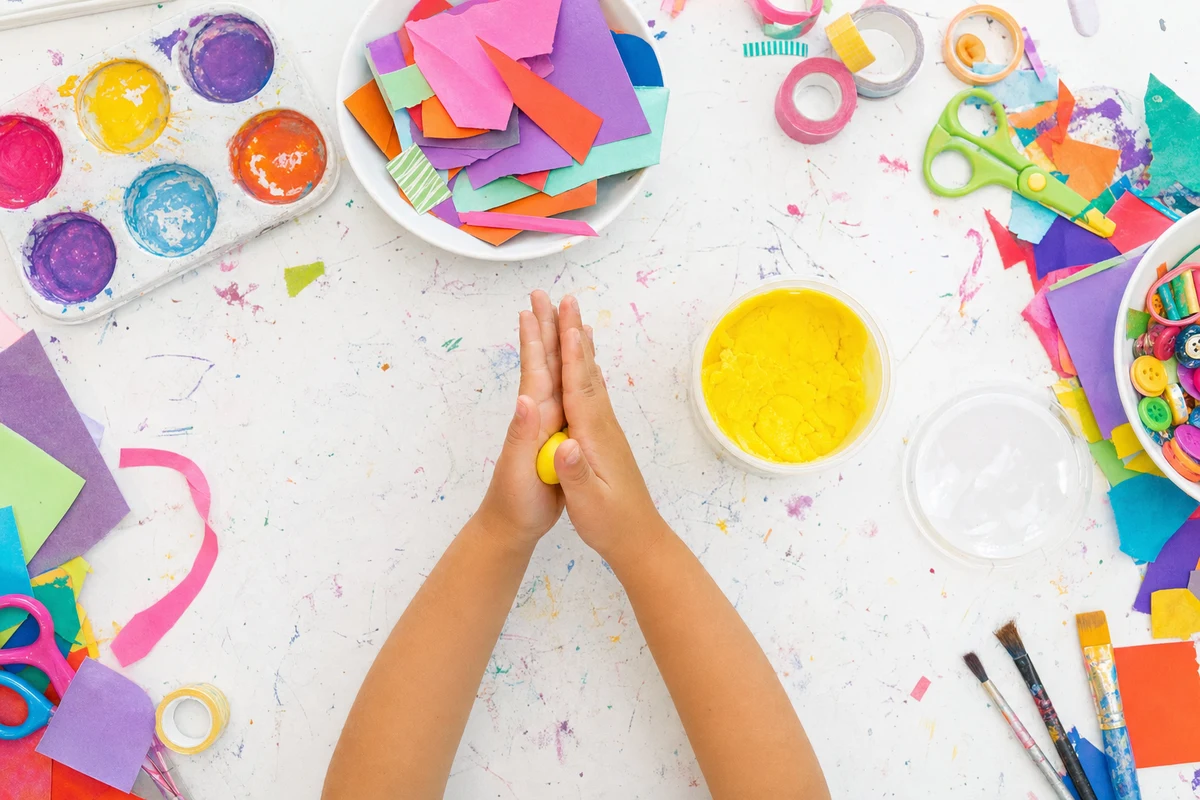
The dough is asleep and cold, so we wake it up by warming it between two flat hands.
One move at a time: roll a snake, squash a pancake, pinch a little pot. With clay, wet fingers just a little, because too much water turns it to mud.
The dough lives on the mat. It gets lonely on the floor, and it never goes in mouths.
Roll it back into a ball and tuck it into its bed, the airtight tub, so it does not dry out.
Warm it between two flat hands.
One move at a time.
The dough lives on the mat.
Check first: wheat allergies before using flour playdough, and use clay labelled non-toxic.
Card 07
The water pot
Three small moves that save a painting session
Bath, wipe, dab.
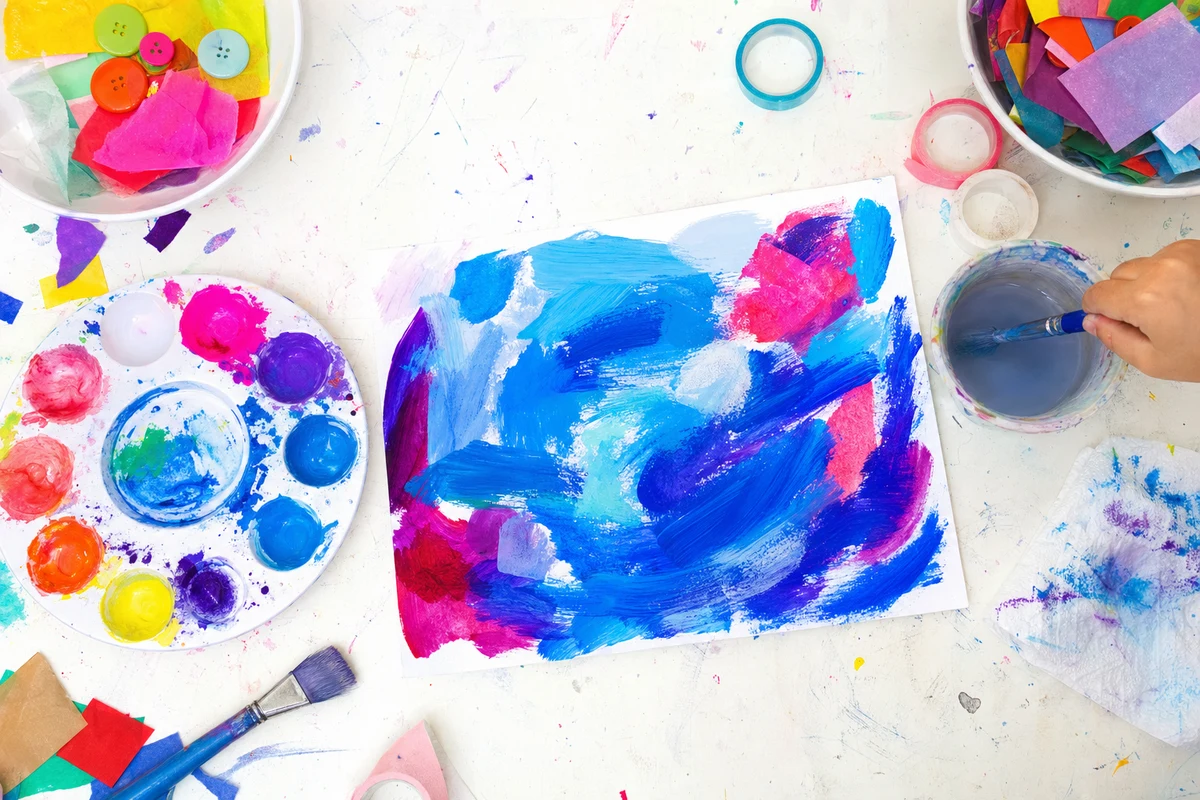
Every time the colour changes, the brush has a bath, a wipe and a dab.
The bath: swish in the water. The wipe: on the edge of the pot so she does not drip. The dab: on the paper towel.
Fill pots only halfway and place them at the top corner of the page, away from elbows. Keep a towel within reach and wipe any spill off the floor straight away.
Bath. Wipe. Dab.
Every time the colour changes.
Goes wrong: a water pot goes over. Fix: towel, refill a third, keep going. Fill pots halfway next time and keep them at the top corner.
Any other material
Four things and you have introduced anything
Clay, charcoal, ink, wire. The frame does not change.
Show the exact grip, slowly, up high where everyone can see. Name it with a story. Then have them show you the grip in the air before a single tool is touched.
Demonstrate the one move you want, and only that move. “Dot, dot, not a lot.” Keep it to one clear action they can copy.
This is where the story earns its keep. “If the texta loses its lid it gets sick and dries up.” Caring for the tool becomes kindness, not compliance, and they police it themselves.
Teach the ending before they start, so pack-up is part of the play, not a battle. “When the crocodile is finished, he goes to sleep, blades shut, pointing at the floor.”
The bit that keeps it running
Put away is part of the story
A room where the educator packs away is a room where materials go missing and the programme narrows to whatever survives. A room where children put things to bed keeps everything, and the children learn where things live, which is most of independence.
Everything goes back to bed. Lids on, pastels in their spot, the crocodile asleep.
The dough goes in its tub. The brush has a bath, a wipe and a dab.
Two minutes of warning first, always. A child pulled off something they are absorbed in will fight you, and they are right to.
The test. Walk out of the room at put-away and come back in ninety seconds. If it is going without you, the stories are working. If it stopped, the material never had a proper introduction.
From Valando
Want the whole system behind the cards?
The Method teaches you how to set up, how to introduce every material and the words to use, so any educator can run a calm table.
Take the next step
Ready for the whole thing?
This guide gives you the ideas. The courses teach you how to run them, step by step, so it works on a real Tuesday.
The Method
$999 or $1,499 for your whole site
- Calm, confident art with three to six year olds
- Set-up, materials and the words to use, taught step by step
- 7-day money-back guarantee
The Kitchen Table Method
$139 once, yours for life
- Short audio lessons in my voice, to listen to while dinner cooks
- A ready-to-go activity and printable card for every session
- The exact words to say when it gets hard
I'm a qualified teacher. I studied teaching at Flinders University and taught in a primary school, from reception to year two, for about eight years. I now run an art studio for 3 to 6 year olds in Adelaide, I've written my own teaching method, and I'm a mum of three girls. Everything here is what I actually do, not theory.