by Valando Demetriou
The Fine Motor Skills Checklist
What to expect from ages 2.5 to 6, and ten things that build the hand.
Enter your name and email and it opens straight away.
Want the whole course instead? The Kitchen Table Method or The Method for educators.
The fine motor skills checklist
What to expect from ages 2.5 to 6, and ten things that build the hand.
- Grip is built from the shoulder down, then the elbow, wrist and fingers.
- A fist grip at four or five is common, not a problem.
- Ten minutes of drawing on a wall beats ten minutes of tracing at a table.
- If several things feel hard at five or older, speak to your GP or an occupational therapist.
From Valando
Want these skills to build themselves?
The Kitchen Table Method teaches you how to set up the table and what to say, so hands, focus and confidence grow a little every week.
Start here
Grip is not a habit. It is a strength.
If your four or five year old holds a pencil in a fist, they are not behind. They are partway up a ladder, and the ladder has to be climbed in order. Shoulder first. Then elbow. Then wrist. Then fingers.
Shoulder
Big movements. Painting on an easel or a wall, drawing on paper taped to a vertical surface, sweeping, wiping a table.
Elbow
Controlled arm movement. Rolling dough with both hands, tearing paper, pouring from a small jug.
Wrist
Turning and twisting. Screwing lids on jars, wringing a cloth, stirring a bowl.
Fingers
Small, precise work. Threading, tweezers, pegs, pinching playdough.
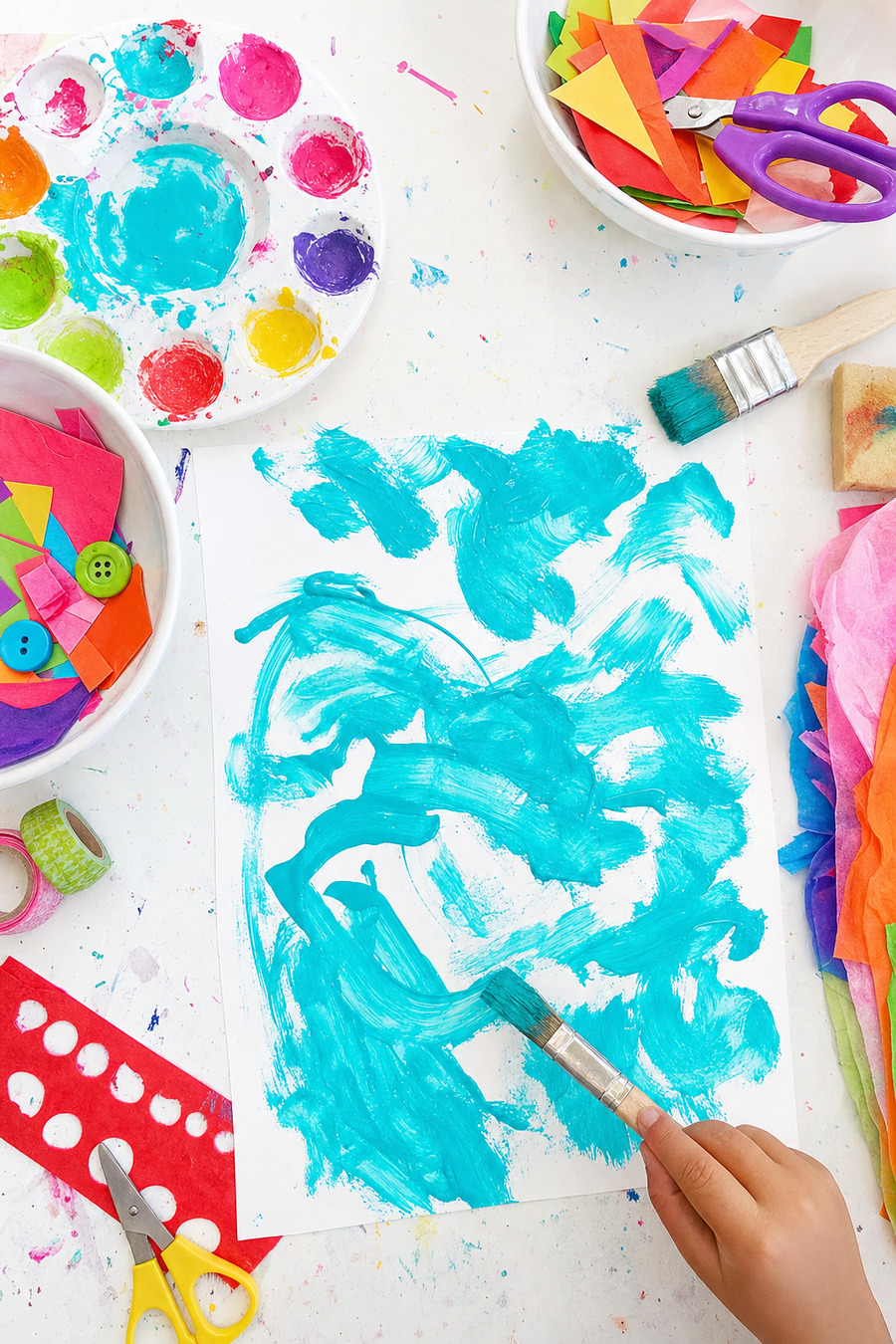
Why correcting at the table rarely works. A child cannot hold a pencil the way we want until the rungs below have been built. Play builds them, and it never feels like being corrected.
Age by age
What to expect, ages 2.5 to 6
These are guides, not deadlines or pass and fail tests. Children develop at different rates. Tick what your child can do.
Building the basics
Age 2.5 to 3
Precision emerging
Age 3 to 4
Control developing
Age 4 to 5
School ready
Age 5 to 6
What to notice. At three, many children can hold a crayon but not yet control it precisely. By four you would usually see more control starting to show.
What to try. Playdough, threading, tearing and scissor play as regular free-choice activities. They give lots of practice without feeling like practice.
Build it at home
Ten activities that build the hand
No special equipment needed. Each one builds grip strength, hand-eye coordination or both, through play children actually want to do.
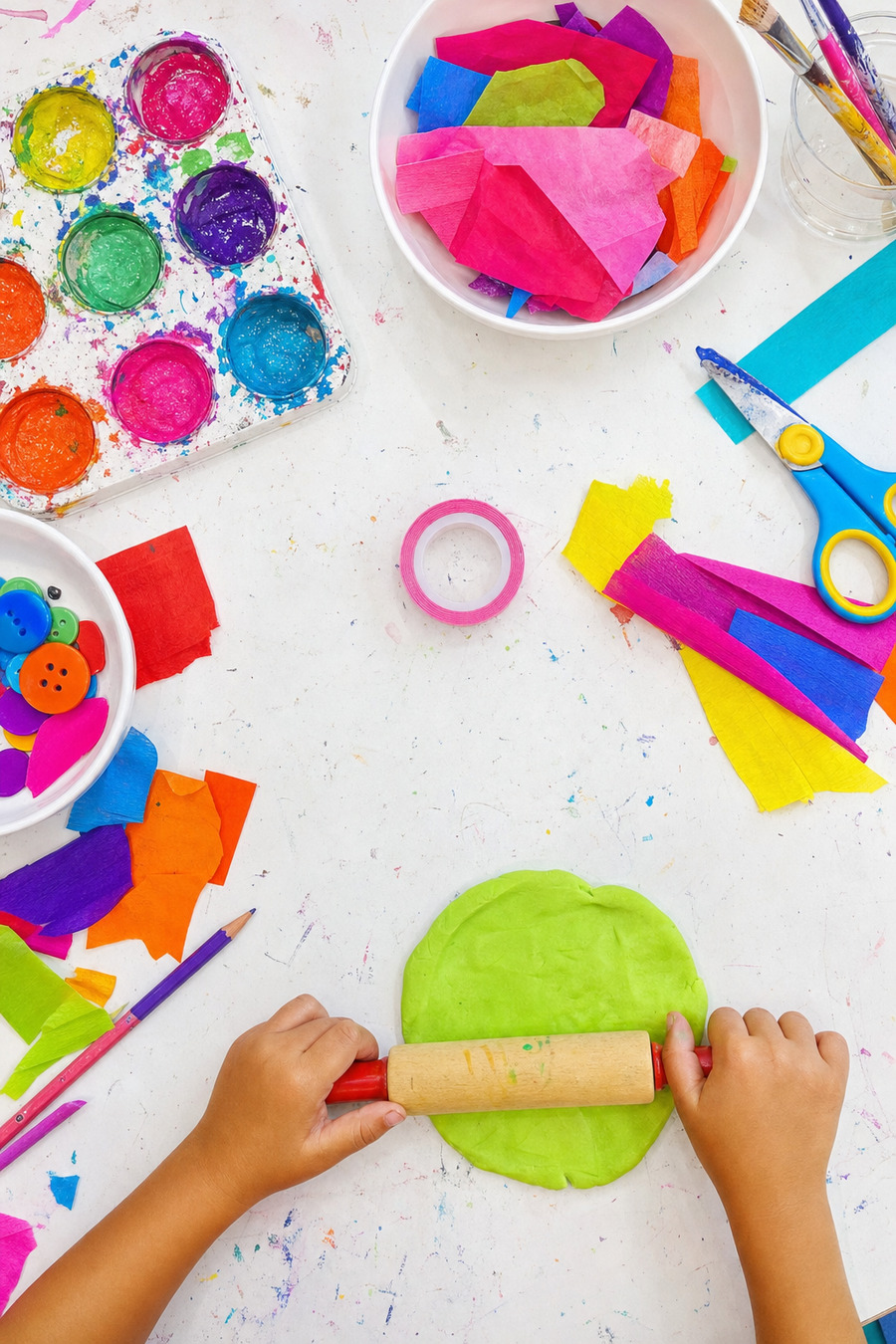
- 1. Playdough
Rolling, pinching, pressing and squeezing builds the small muscles of the hand. - 2. Scissor practice
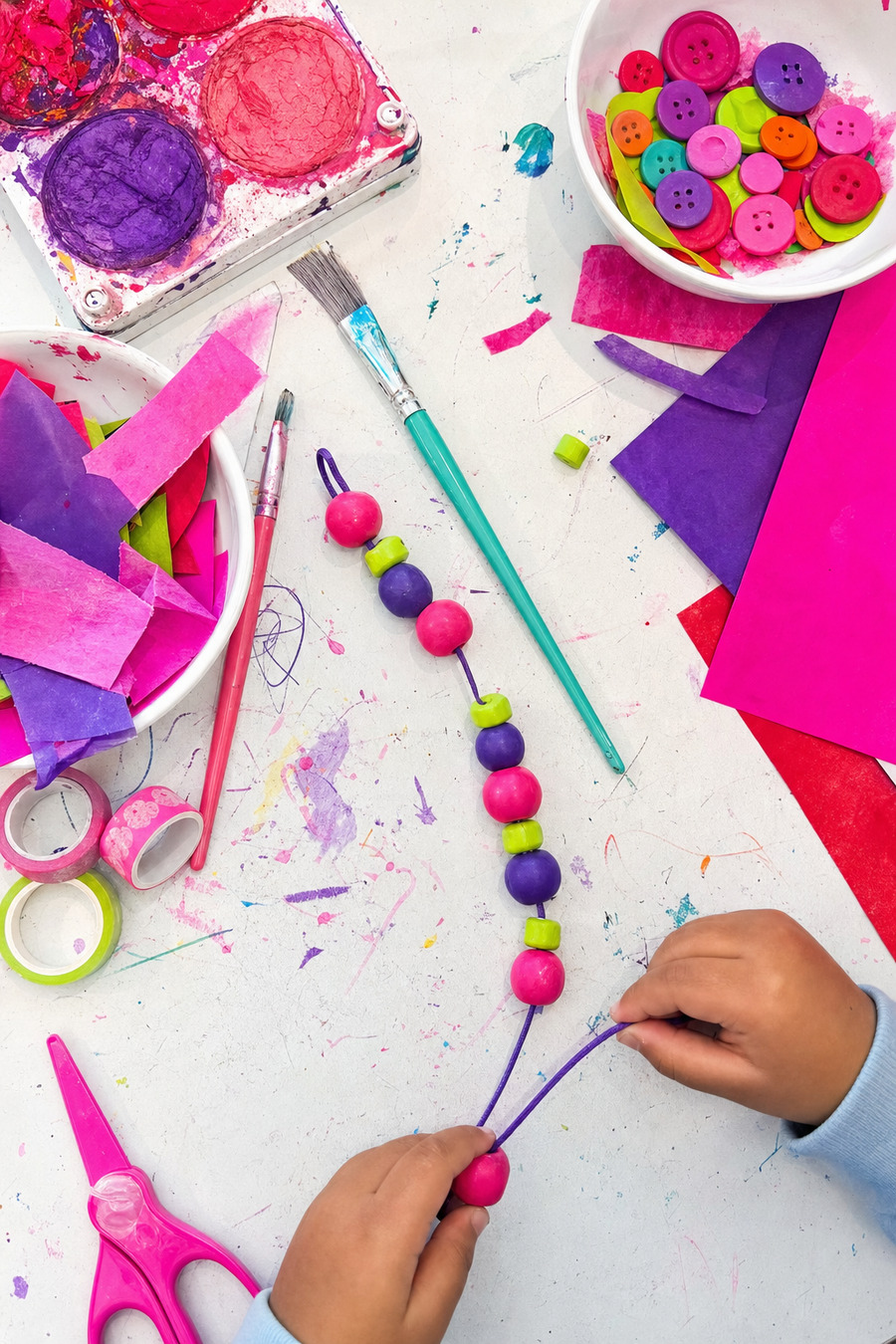
Start by snipping fringe. Move to straight lines, then curves. - 3. Bead threading
Large beads on thick laces first, then smaller beads on thinner laces. - 4. Tearing and collage
Tearing paper in a controlled direction is harder than it looks, and worth doing often. - 5. Tweezers and pom-poms
Move pom-poms between containers with tweezers or tongs. - 6. Watercolour painting
Small brushes ask for a precise grip. Change the brush size to change the challenge. - 7. Finger knitting
Looping yarn over single fingers builds finger movement that works one finger at a time. - 8. Hole punching
Punch holes in old cards, then thread ribbon through them. - 9. Dot-to-dot drawing
Drawing between two points practises the control that letter shapes need. - 10. Peg play
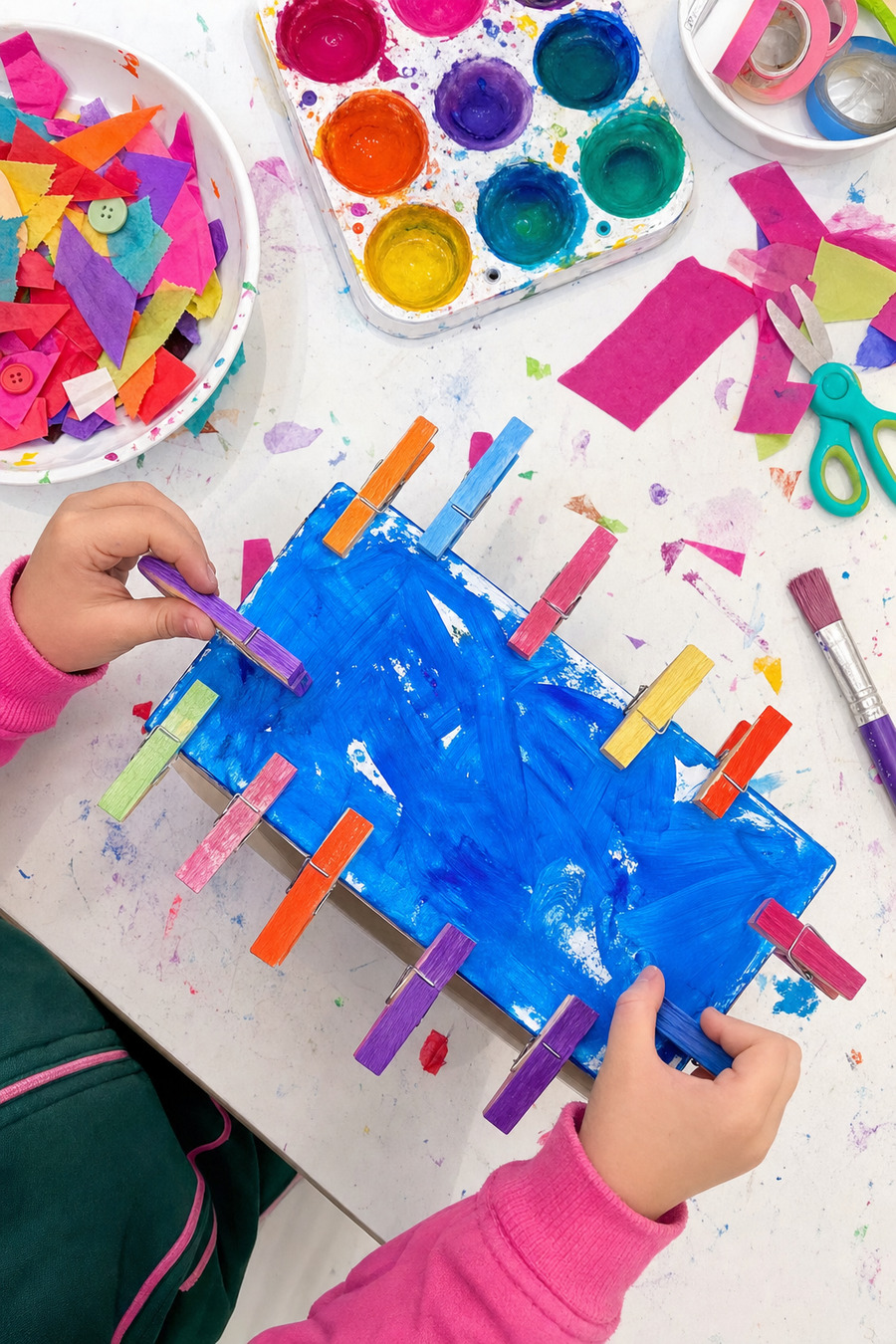
Clip pegs to a box or hang washing on a low line. The squeeze and place builds pinch strength.
When to speak to a professional. If your child seems to be finding several of these hard at five or older, or you are worried at any age, speak to your GP or ask about a paediatric occupational therapist. Getting support early can help.
This guide is general information and is not medical advice.
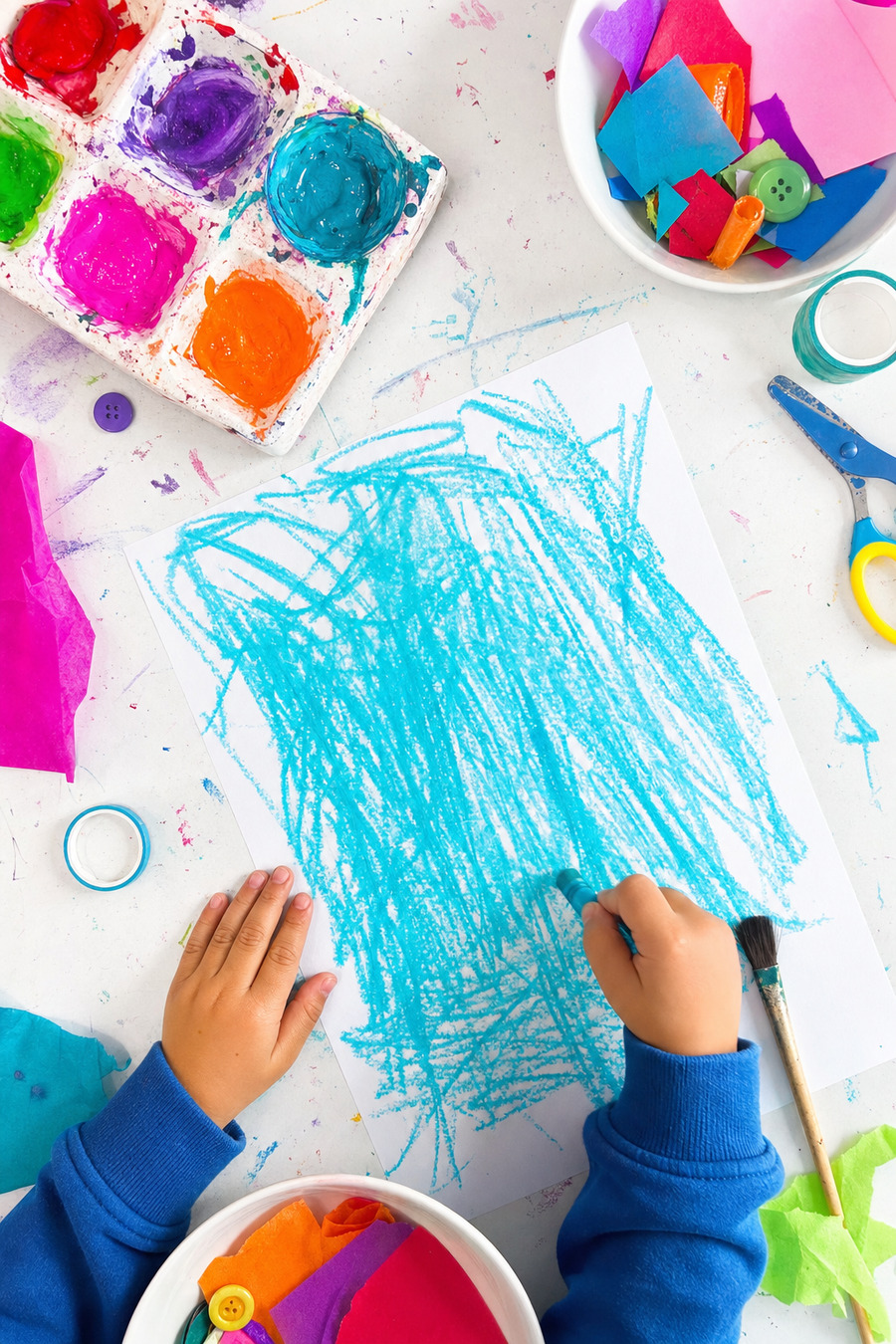
One thing to remember
Grip is built from the shoulder down.
Be patient with the ladder.
If this helped, send it to another parent who is still correcting a grip that will not budge.
The teacher's why
Why the shoulder comes first
Therapists often describe it as being stable in the middle and free at the ends. For the fingers to move precisely, the shoulder and arm have to be steady enough to hold the hand in place.
That's why climbing, hanging, pushing and drawing on a wall or easel come before fine pencil work. Children who haven't had enough big movements often grip too tightly, tire quickly or avoid drawing. It isn't laziness. The foundation isn't built yet.
What you might see
The stages of pencil grip
Fist grip
The whole hand wraps around the crayon. Common from about one to two and a half, and still common at three.
Fingers pointing down
The pencil is held with the fingers, but the wrist is turned over. Often seen around three.
Static tripod
Thumb, index and middle finger hold the pencil, but the whole hand moves. Often appears around four.
Dynamic tripod
The fingers move the pencil while the wrist rests. Many children reach this around five or six.
These ages are a rough guide only. Children move through the stages in different ways and at different speeds.
Tips by age
What to try at each age
Age 3
- Playdough, tearing paper, pouring water
- Fat crayons and chunky chalk
- Painting with a big brush on large paper
Age 4
- Snipping with scissors, fringe first
- Beads on a thick lace
- Drawing on paper taped to a wall
Age 5 to 6
- Cutting along curves
- Tweezers, pegs and tongs
- Short bursts of drawing, then a break
Common mistakes
Five things that backfire
Troubleshooting
If your child...
No time?
Five-minute versions
Wall drawing
Tape paper to the wall and hand over a fat crayon.
Peg line
Clip pegs to a string or the edge of a box.
Tear and stick
Tear paper into pieces and glue them on.
Water pour
Pour from a small jug into a cup, outside.
From Valando
Want these skills to build themselves?
The Kitchen Table Method teaches you how to set up the table and what to say, so hands, focus and confidence grow a little every week.
Sources and further reading
Where this comes from
- Get a grip on pencil grip Learning Potential, Australian Government
- Find an occupational therapist Occupational Therapy Australia
Take the next step
Ready for the whole thing?
This guide gives you the ideas. The courses teach you how to run them, step by step, so it works on a real Tuesday.
The Kitchen Table Method
$139 once, yours for life
- Short audio lessons in my voice, to listen to while dinner cooks
- A ready-to-go activity and printable card for every session
- The exact words to say when it gets hard
The Method
$999 or $1,499 for your whole site
- Calm, confident art with three to six year olds
- Set-up, materials and the words to use, taught step by step
- 7-day money-back guarantee