by Valando Demetriou
The Big Feelings Cheat Sheet
What to do and say when your child's feelings are too big, plus art activities that help.
Enter your name and email and it opens straight away.
Want the whole course instead? The Kitchen Table Method or The Method for educators.
The Big Feelings Cheat Sheet
What to do and say when your child's feelings are too big, plus art activities that help.
- A calm adult is the biggest help. Get low, slow your voice.
- Name the feeling first: "You're angry."
- Wait until they're calm to talk about what happened.
- Art gives big feelings somewhere to go.
From Valando
Big feelings need a calm grown-up with a plan.
The Kitchen Table Method gives you both: how to set up a calm table and what to say when it gets hard.
Start here
Big feelings aren't a problem to fix
Little children don't yet have the words for big feelings. They show them with their bodies, their voices and sometimes their fists.
Our job is to stay calm, name the feeling and show them what to do next. Art is a gentle way to give those feelings somewhere to go.
What it looks like
What this looks like
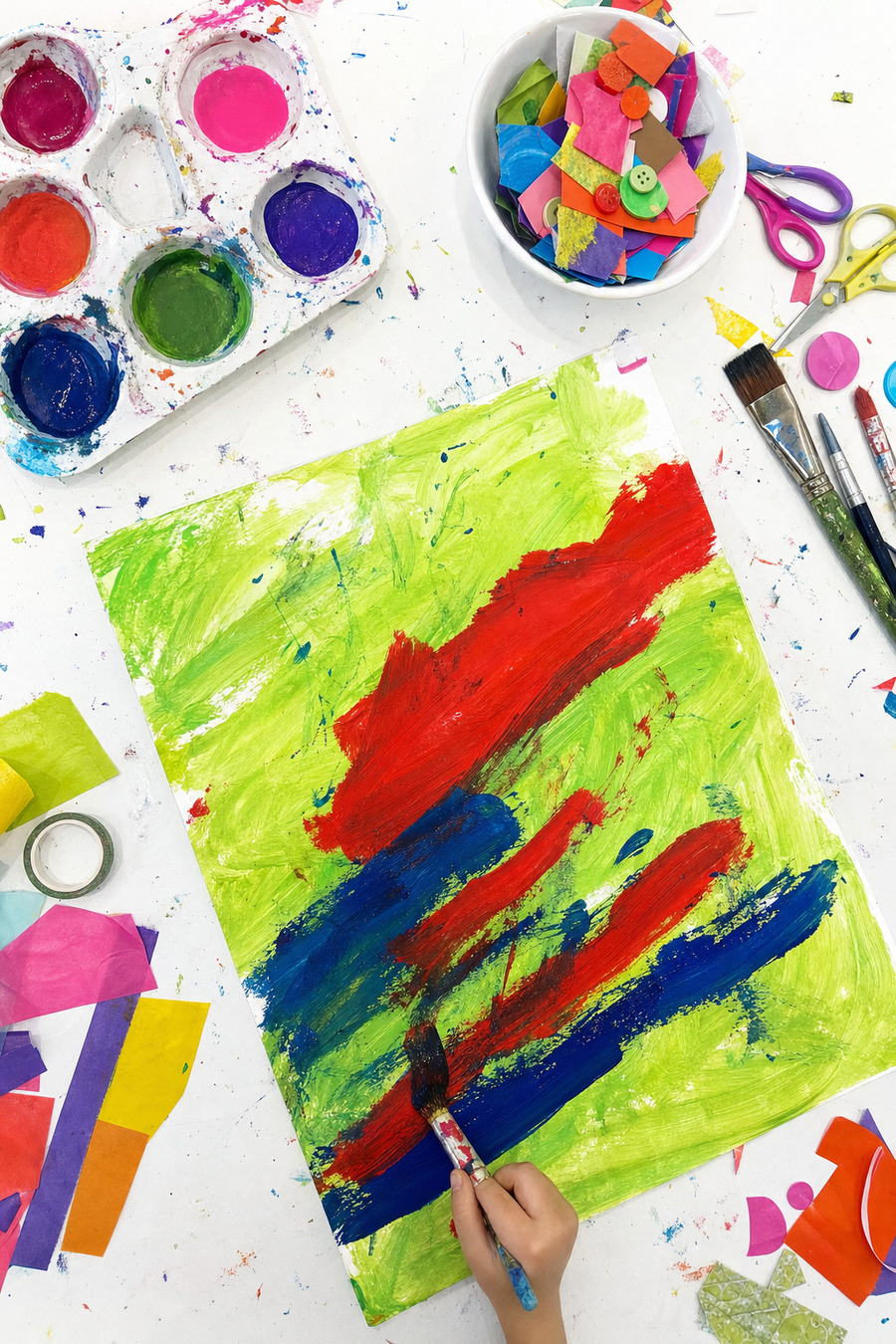
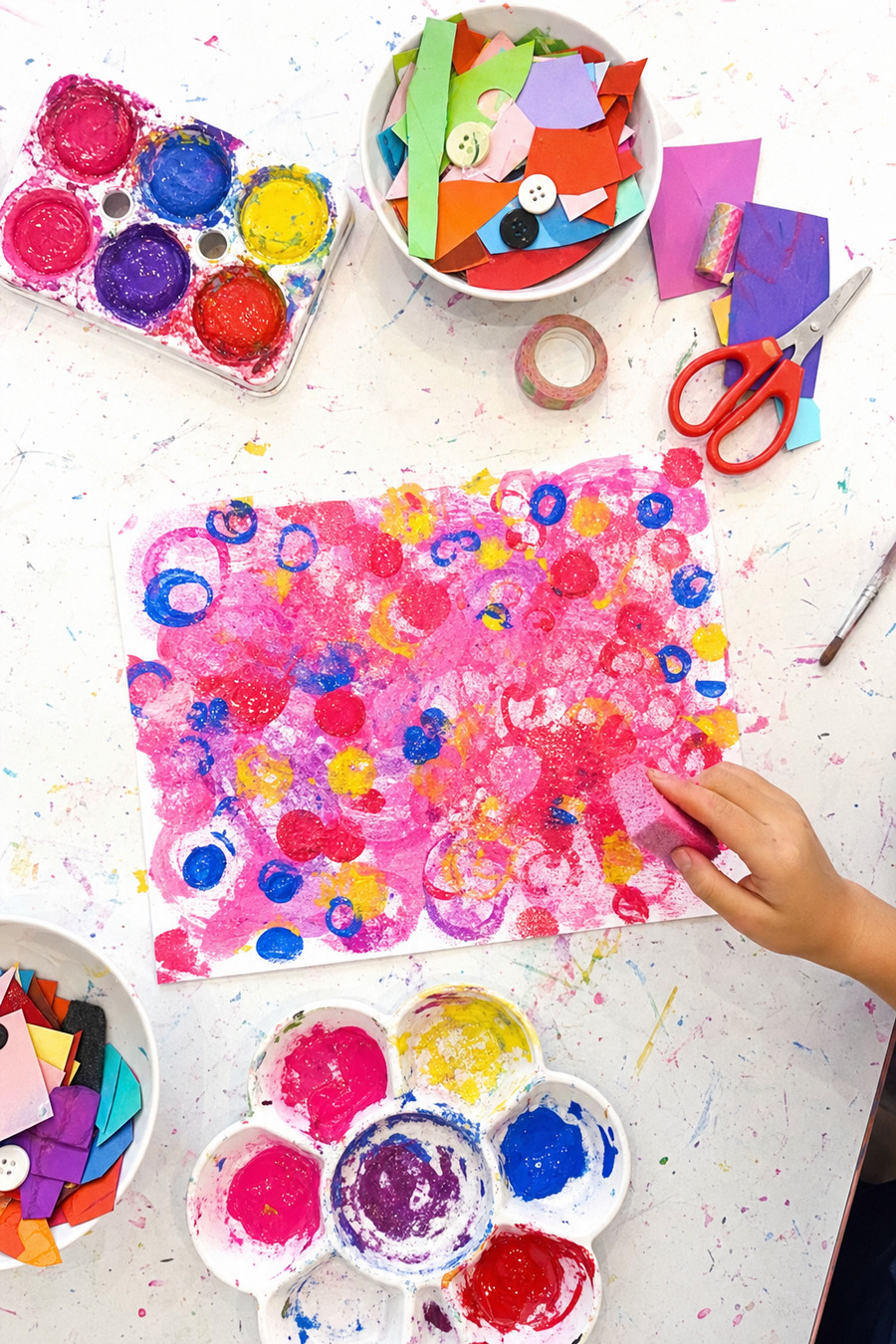
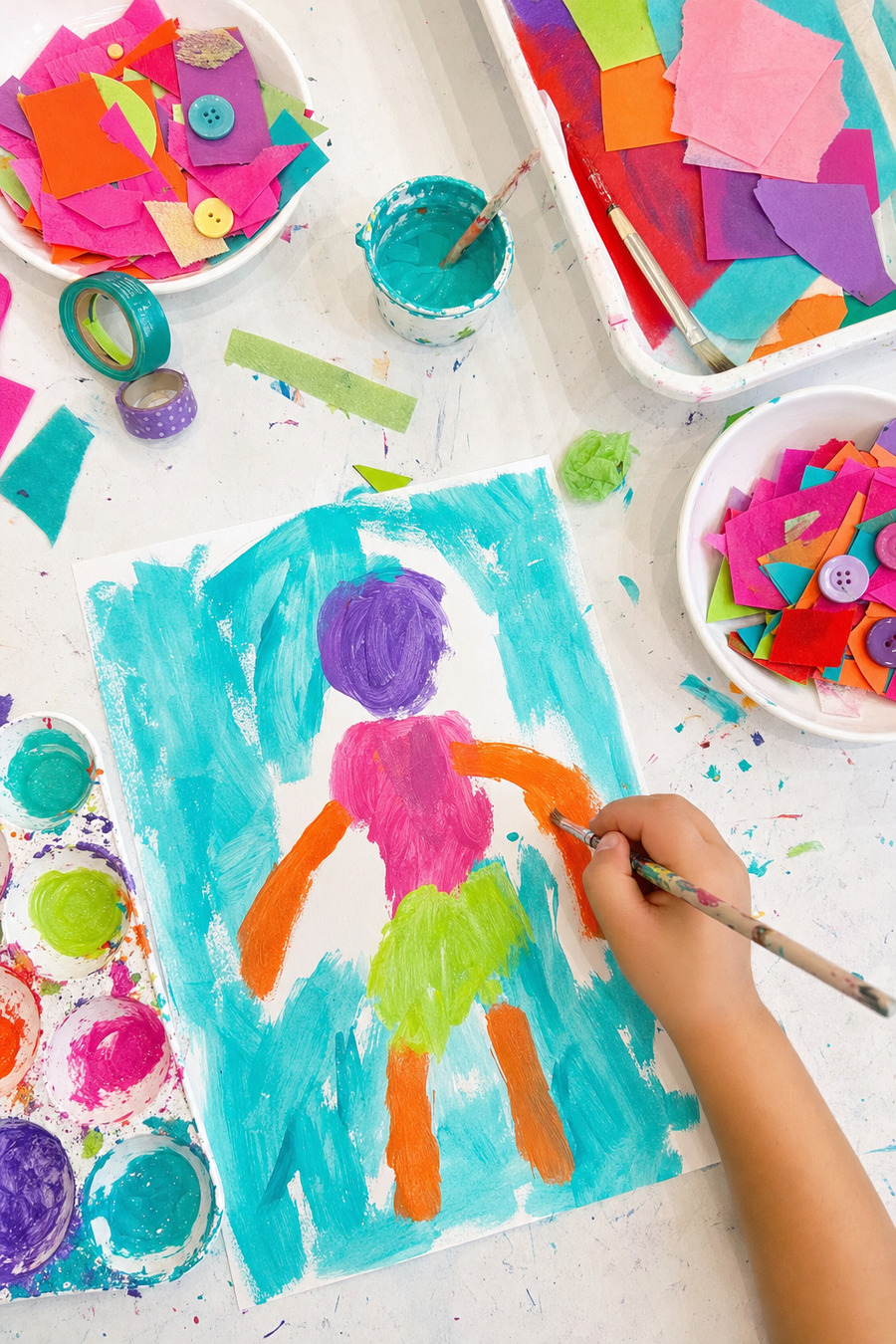
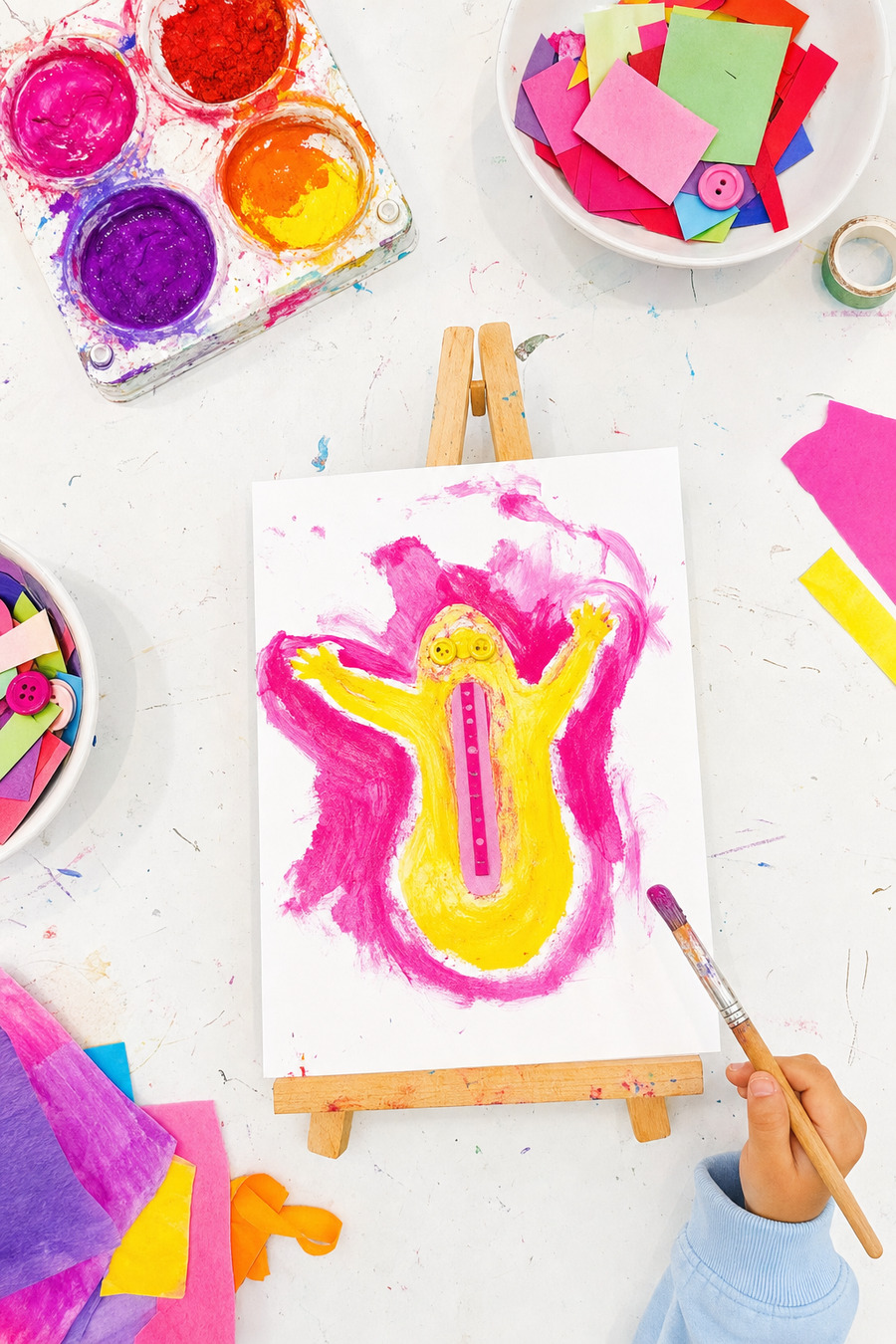
In the moment
Three steps for a big feeling
Stay calm and low
Get down to their level and slow your voice. Your calm is the biggest thing you can offer.
Name it
"You're angry because the game ended." Naming a feeling helps children understand it.
Offer a way through
"Do you want a cuddle or some space?" or "Let's go and paint it."
Art as a feelings language
Five art activities for big feelings
Angry scribble
You need: big paper and a crayon or marker.
- Say, "Show me how angry looks."
- Let them scribble hard and fast.
- Say, "I see big, strong lines."
Why it works: the feeling goes onto the paper, and you can talk about it afterwards.
Calm swirl
You need: paper and watercolours.
- Wet the paper with clean water.
- Drop in a calm colour and let it spread.
- Breathe slowly together while you watch.
Why it works: slow, gentle movement helps little bodies settle.
Feelings colours
You need: paper and crayons.
- Ask, "What colour is happy? What colour is cross?"
- Colour a patch for each feeling.
- Keep it on the fridge to point to.
Why it works: it gives them words and colours for feelings.
Squeeze and squash
You need: playdough.
- Squeeze it hard, roll it flat, pound it.
- Say, "Let's squeeze the big feeling out."
Why it works: pressing and squeezing is a calming workout for the hands.
Draw the feeling's face
You need: paper and a pencil.
- Draw a face for how they feel.
- Ask, "What does this face need?"
Why it works: drawing a feeling gives distance from it.
Please note
When to ask for help
If your child's big feelings are very frequent, very intense or getting in the way of daily life, speak to your GP or ask about a child psychologist. This guide is general information and is not medical advice.
The teacher's why
Calm first, words second
When a young child is flooded with a big feeling, the thinking part of their brain is hard to reach. That's why reasoning in the middle of a meltdown usually doesn't work.
What does help is a calm adult nearby, a short, kind phrase that names the feeling, and time. The talking comes after. This is sometimes called co-regulation: your calm helps theirs.
Words that help
Say this, not that
They're screaming
"I'm here. I won't leave."
"You're having a big feeling."
Instead of: "Stop it. You're fine."
They hit
"I won't let you hit. I'll help you stop."
"You can stomp or squeeze this cushion."
Instead of: "That's naughty!"
A meltdown in public
Pick them up or move somewhere quiet.
"We'll take a break. I've got you."
Instead of: "Everyone is looking."
Tips by age
What works at each age
Age 3
- Short phrases, big hugs
- Name one feeling at a time
- Use pictures and colours
Age 4
- Offer two choices
- Use breathing games: bubbles, dragon breath
- Draw the feeling
Age 5 to 6
- Talk about what happened afterwards
- Make a calm-down plan together
- Name bodily clues: tight tummy, hot cheeks
Common mistakes
Five things that backfire
You're allowed to have big feelings too
Say, "I'm having a hard moment. I need a minute." Then take one. Children learn from watching us.
From Valando
Big feelings need a calm grown-up with a plan.
The Kitchen Table Method gives you both: how to set up a calm table and what to say when it gets hard.
Sources and further reading
Where this comes from
- Emotions and play: preschoolers Raising Children Network (Australia)
- Find an occupational therapist Occupational Therapy Australia
Take the next step
Ready for the whole thing?
This guide gives you the ideas. The courses teach you how to run them, step by step, so it works on a real Tuesday.
The Kitchen Table Method
$139 once, yours for life
- Short audio lessons in my voice, to listen to while dinner cooks
- A ready-to-go activity and printable card for every session
- The exact words to say when it gets hard
The Method
$999 or $1,499 for your whole site
- Calm, confident art with three to six year olds
- Set-up, materials and the words to use, taught step by step
- 7-day money-back guarantee