Little children can enjoy real artists. They don't need the history. They need to look closely, talk about what they see, then make something of their own.
Each lesson below takes about fifteen minutes. You'll look at the artwork, ask three questions, make something and then share it. That's the same rhythm I use when I teach. The pictures of the artworks are all in the public domain.
Before you start
The same four steps every time
1
Look
Show the picture. Say nothing for ten seconds. Then ask the three questions in the lesson.
2
Say one thing
Tell your child one thing about the artist, in one sentence. Keep it short.
3
Make
Set out the materials and step back. Don't make one yourself first, because children copy it.
4
Share
Ask, "Tell me about it. What was the tricky part?"
Your child's work won't look like the artist's, and it shouldn't. The artist is the spark, not the answer.
The lessons
Five artists, five lessons
1
Wassily Kandinsky
1866 to 1944, Russia
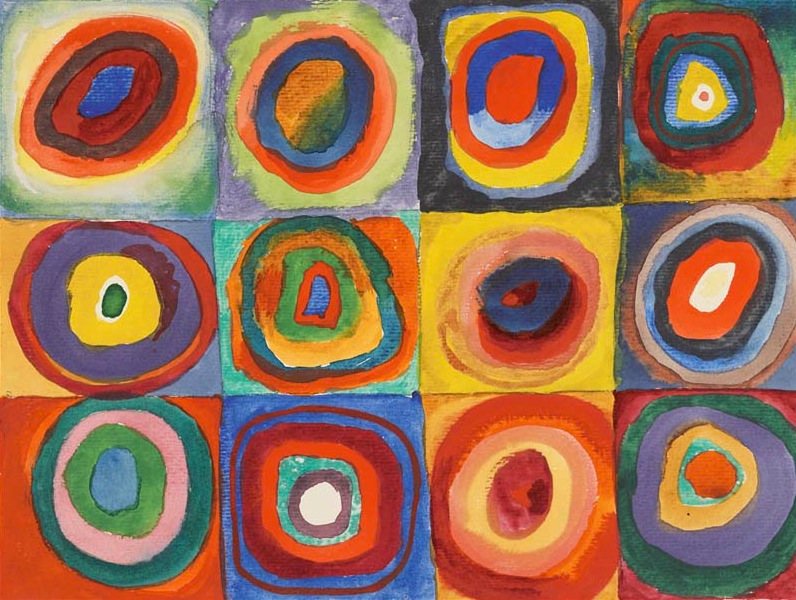
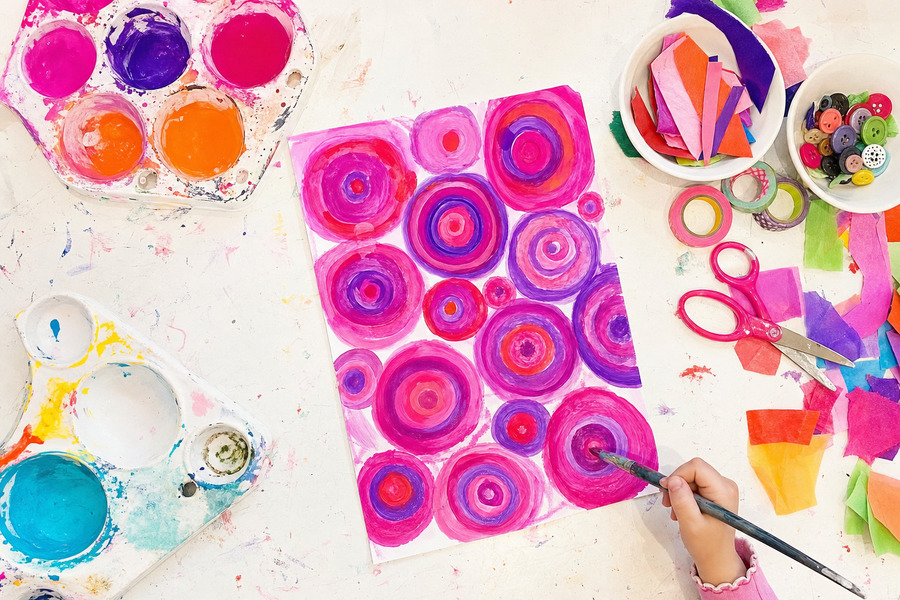
Squares with Concentric Circles, 1913. Public domain.What yours might look like.
Kandinsky loved colour so much that he said it felt like music. He painted circles in circles, like ripples.
Prep: lowMess: lowTime: 15 minutes
Look together
What shapes can you see?
Which colour is the loudest? Which is the quietest?
If these circles made a sound, what would it be?
You need: paper, crayons or oil pastels, and optional watercolour.
Make it:
Draw a small circle in the middle of the page.
Draw bigger circles around it, one ring at a time, like ripples in a pond.
Colour each ring a different colour.
Optional: paint a wash of watercolour over the top. The crayon will push the paint away.
Try saying
"You made a circle inside a circle inside a circle. Tell me about the middle one."
2
Vincent van Gogh
1853 to 1890, the Netherlands
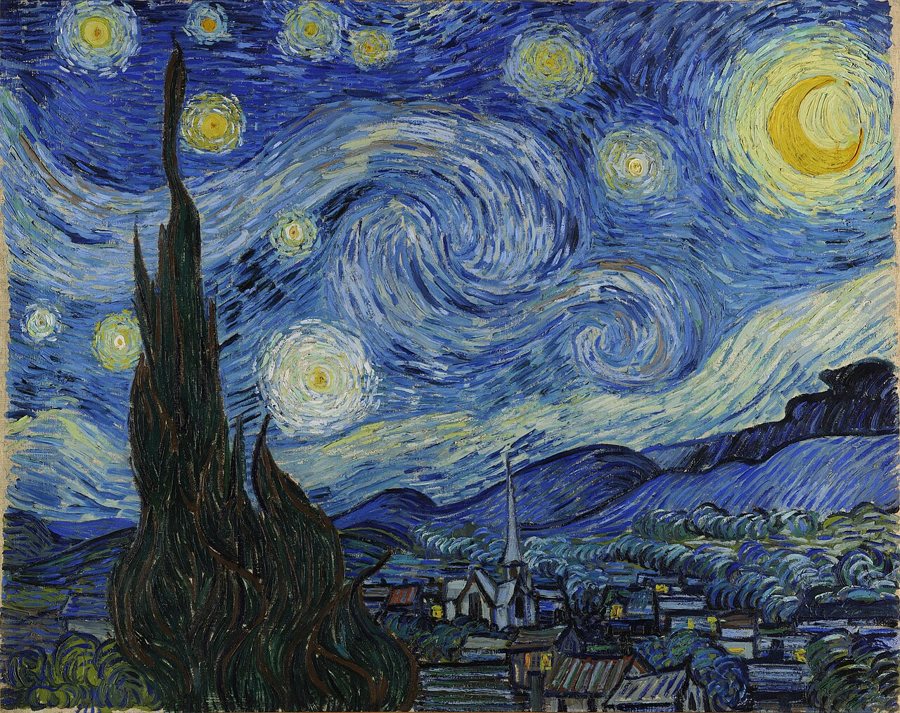
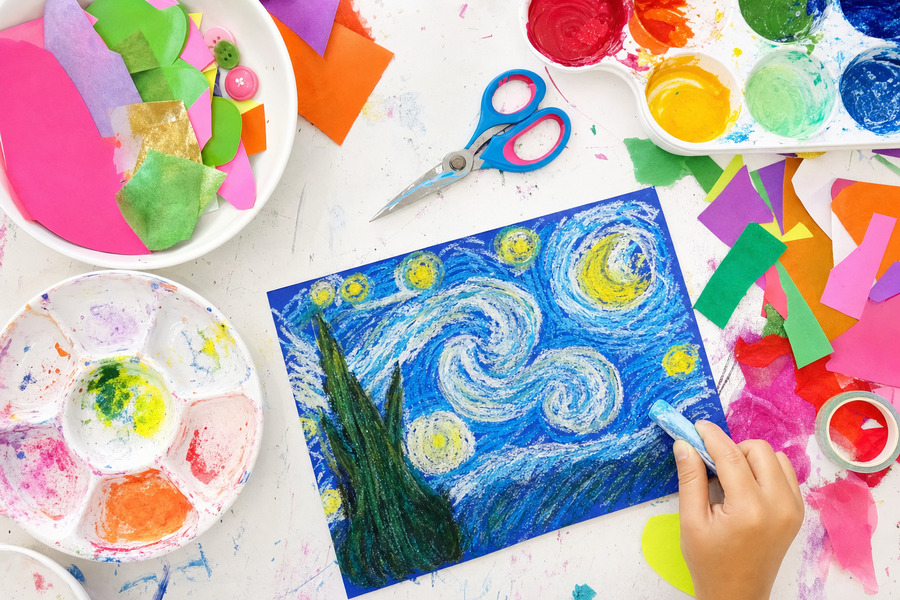
The Starry Night, 1889. Public domain.What yours might look like.
Van Gogh painted a night sky that seems to move. His brushstrokes swirl like wind.
Prep: lowMess: lowTime: 20 minutes
Look together
What is moving in this picture?
Where is the brightest light?
How do you think the night feels?
You need: dark blue or black paper if you have it (or white paper and blue paint), chalk or oil pastels in white, light blue and yellow.
Make it:
Draw big swirls across the sky with white and light blue. Use the whole arm, not just the wrist.
Add a few yellow stars, each with rings around it.
Draw a dark hill at the bottom, with tiny houses and yellow windows.
Optional: if you used white paper, wash over it with blue paint.
Try saying
"Your swirls look like wind. Which one is the strongest?"
3
Henri Rousseau
1844 to 1910, France
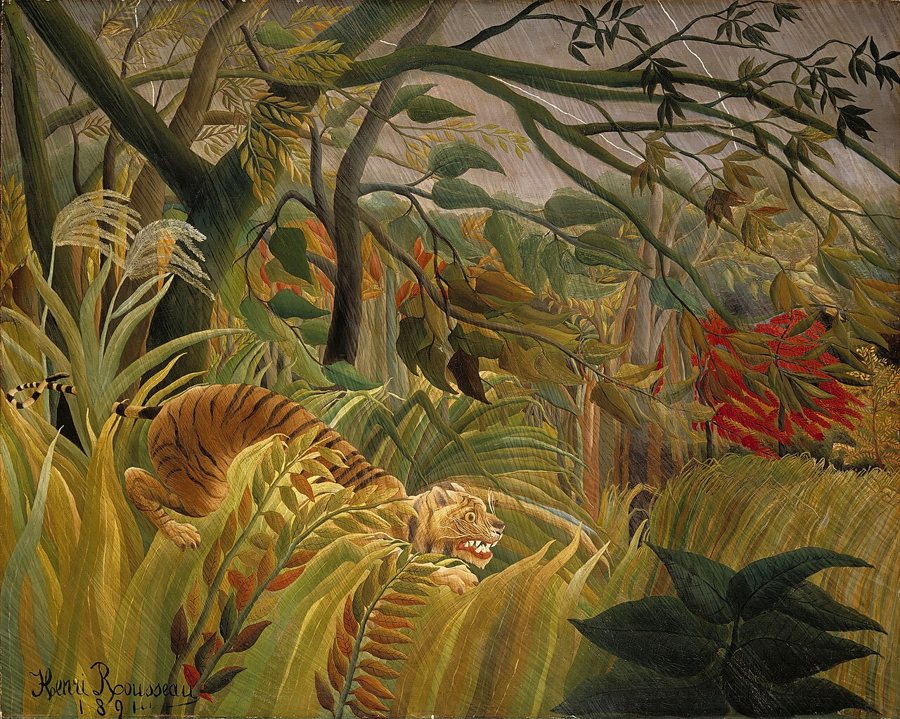
Surprised!, 1891. Public domain.What yours might look like.
Rousseau painted jungles, but he never went to one. He looked at plants in the botanical gardens in Paris and imagined the rest.
Prep: lowMess: lowTime: 20 minutes
Look together
How many different greens can you count?
What might be hiding in the leaves?
What can you hear in this jungle?
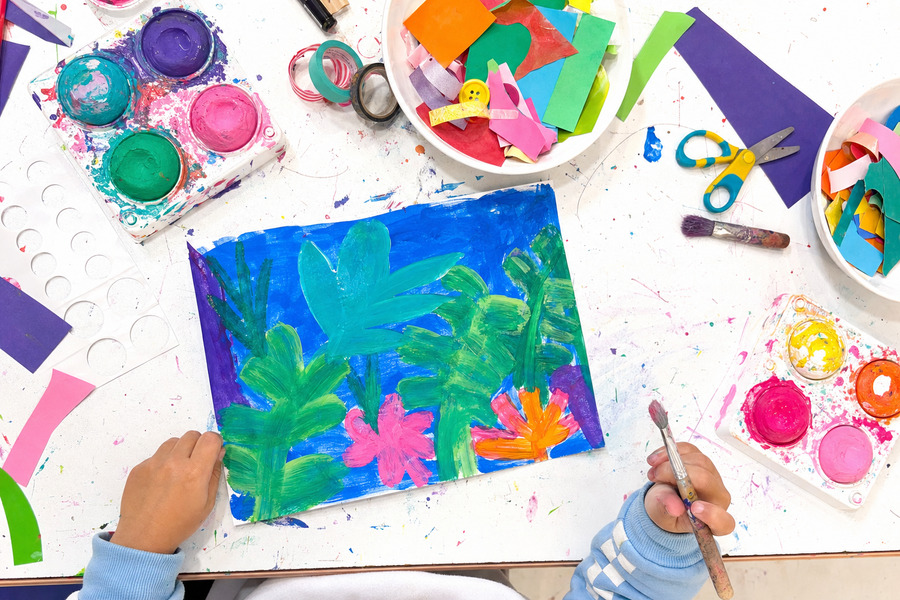
You need: green paper or paper you can paint green, scissors or just hands for tearing, glue, and a few scraps of orange and pink.
Make it:
Cut or tear leaf shapes in different greens. Little hands can tear.
Glue the leaves so they overlap, covering the page.
Peek an animal through the leaves: two eyes, some stripes.
Add a flower or two.
Try saying
"You layered the leaves. I can't see the whole animal. That makes it feel hidden."
4
Piet Mondrian
1872 to 1944, the Netherlands
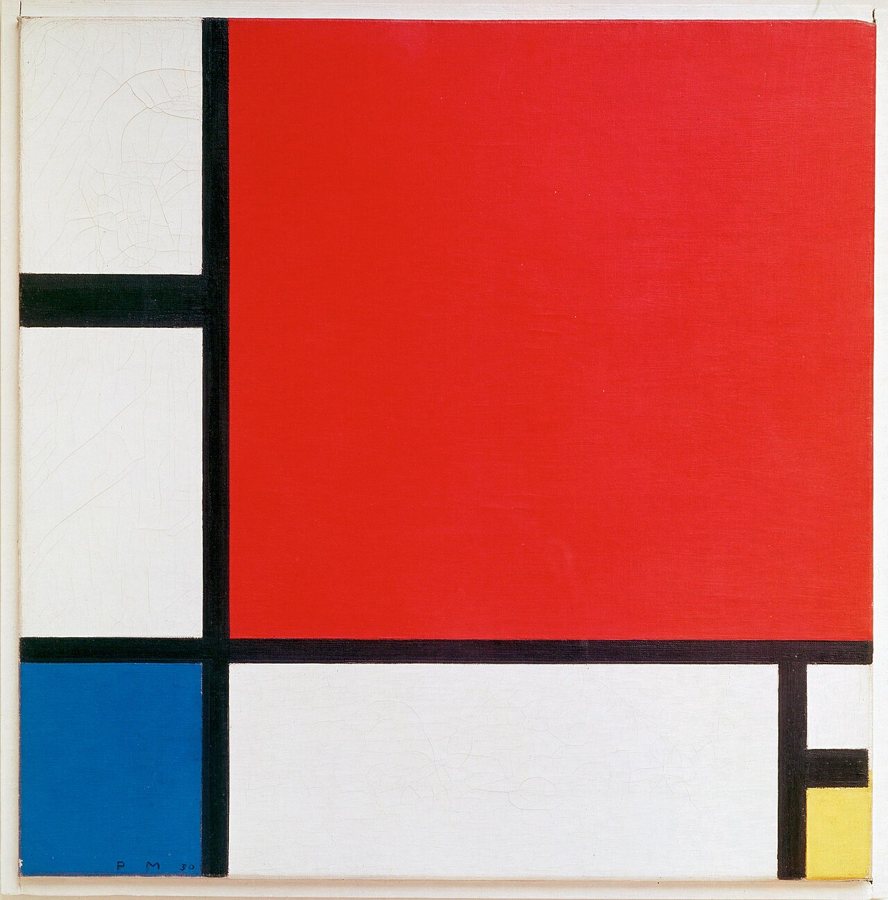
Composition II in Red, Blue, and Yellow, 1930. Public domain.What yours might look like.
Mondrian used only straight black lines and a few colours: red, blue and yellow, with lots of white.
Prep: lowMess: lowTime: 15 minutes
Look together
Which square is the biggest? The smallest?
Which colour do you see most?
Are there any curves in this picture?
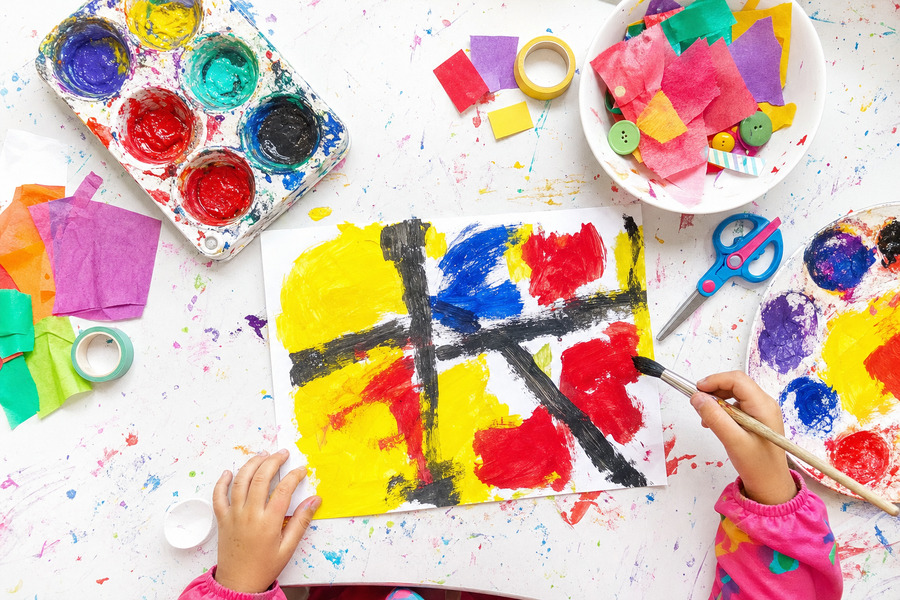
You need: white paper, black masking tape or washi tape, and red, blue and yellow paint, crayon or paper squares.
Make it:
Stick tape across the page in straight lines, up and down and side to side, to make squares.
Choose just a few squares and colour them in with red, blue or yellow.
Leave some squares white.
Look at your grid. Is it balanced?
Try saying
"You chose to leave this big one white. Why?"
5
Paul Klee
1879 to 1940, Switzerland and Germany
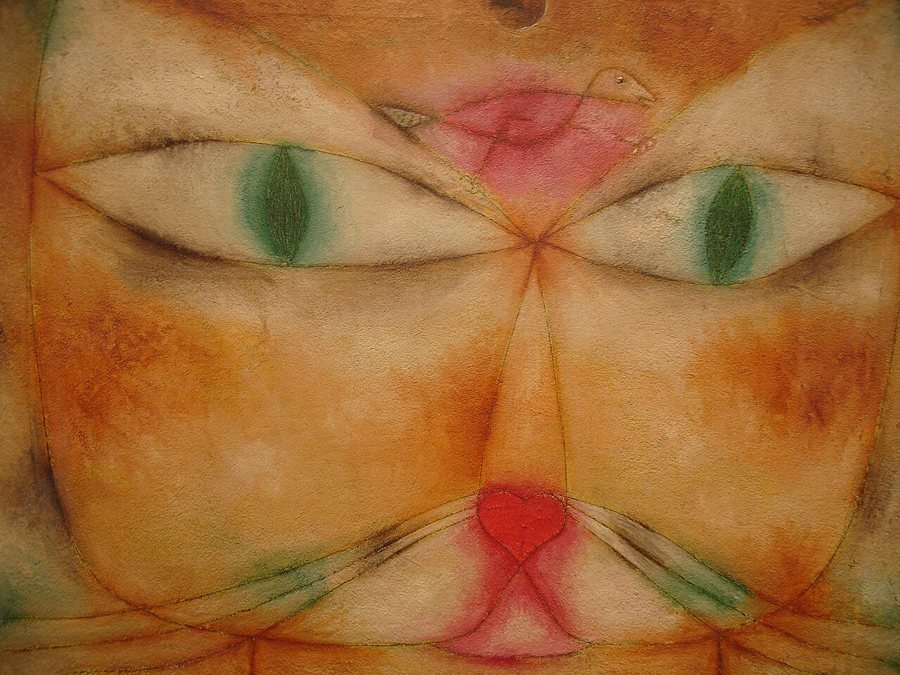
Cat and Bird, 1928. Public domain.What yours might look like.
Klee said that a line is a dot that went for a walk. He loved simple, playful lines.
Prep: noneMess: lowTime: 15 minutes
Look together
Can you find the cat? The bird?
What shapes are inside the picture?
Where does the line start and stop?
You need: paper and a marker or pencil, plus crayons to colour in.
Make it:
Put the pencil on the paper. Pretend it's a dot going for a walk.
Walk it around the page without lifting it for one minute. Wiggle, loop and zigzag.
Look inside your line for shapes: an animal, a face, a house.
Colour in the spaces you like.
Try saying
"Your line went on a big adventure. Where did it start? What did it find?"
Teacher tips
Make it easier on yourself
1
Pick one lesson
Don't do all five in a week. One lesson a weekend is plenty.
2
Find the picture online
Search the artist and the title to show it on a screen, or print it. All five are in the public domain.
3
Keep the talking short
Three questions and one sentence about the artist is enough.
4
Don't make one first
Children copy yours. Make your own after they have finished.
5
Save the work
Put it on the fridge with the artist's name next to it.
Teacher tips
Questions that work for any artwork
1
What do you notice?
An open start. Wait for the answer.
2
What is happening here?
They'll tell a story.
3
How does it make you feel?
There's no wrong answer.
4
What colours can you see?
Name the real words: warm, cool, bright.
5
What would you add?
It starts their own idea.
Tips by age
How to adapt each lesson
Age 3
Choose big movements: swirls, circles, tearing
Five to ten minutes
Skip the artist facts
Age 4
One fact about the artist
Let them choose the colours
Talk about the picture
Age 5 to 6
Look at details
Try the technique twice
Make a series
Common mistakes
Five things that backfire
Common mistake
Try this instead
Asking them to copy the artwork
Use it as a spark, not a pattern
Lecturing about the artist
One sentence, then make
Making one yourself first
Make yours after theirs
Judging the result
"Tell me about it."
Doing all five at once
One a weekend
Start with the one that looks fun
Which artist would your child choose? Show them all five and let them pick.
From Valando
Five lessons is a start. Want them all?
The Kitchen Table Method gives you short audio lessons in my voice and a ready-to-go activity for every one, so you never run out of ideas.
I'm a qualified teacher. I studied teaching at Flinders University and taught in a primary school, from reception to year two, for about eight years. I now run an art studio for 3 to 6 year olds in Adelaide, I've written my own teaching method, and I'm a mum of three girls.
How I wrote this: everything here comes from my teaching and my own kitchen table. Where I've used official guidelines, they are listed under Sources. This guide is general information and not medical advice.
Take the next step
Ready for the whole thing?
This guide gives you the ideas. The courses teach you how to run them, step by step, so it works on a real Tuesday.
For mums
The Kitchen Table Method
$139 once, yours for life
Short audio lessons in my voice, to listen to while dinner cooks
A ready-to-go activity and printable card for every session