by Valando Demetriou
The Home Art Kit
10 things to buy once, and 10 activities that are low prep, low mess and low cost.
Enter your name and email and it opens straight away.
Want the whole course instead? The Kitchen Table Method or The Method for educators.
The home art kit
10 things to buy once, and 10 activities that are low prep, low mess and low cost.
- If you only buy three things, buy cartridge paper, watercolours and washi tape.
- Keep supplies in one box where kids can reach them.
- Ten minutes is plenty. Set it up, then step back.
- Everything here is for ages 3 to 6 with an adult nearby.
From Valando
You've got the kit. Now learn what to do with it.
The Kitchen Table Method walks you through every session, step by step, with the exact words to say while they make.
Start here
You don't need a craft cupboard.
You need ten cheap things and permission to let it be a bit messy. I'm a teacher and a mum of three, and these are the supplies I'd buy again and again. Everything here costs a few dollars, and almost everything is used in more than one activity.
Three rules for every activity
1. Low prep. You can set it up in under 5 minutes.
2. Low mess. One table, one tray, nothing that ends up on the ceiling.
3. Low cost. Most things are already in your house or cost a few dollars.
The 10 supplies
The things I'd buy again
Tick what you already have. What's left is your shopping list.
The 10 activities
Low prep, low mess, low cost
Pick one and go. Each takes a few minutes to set up.
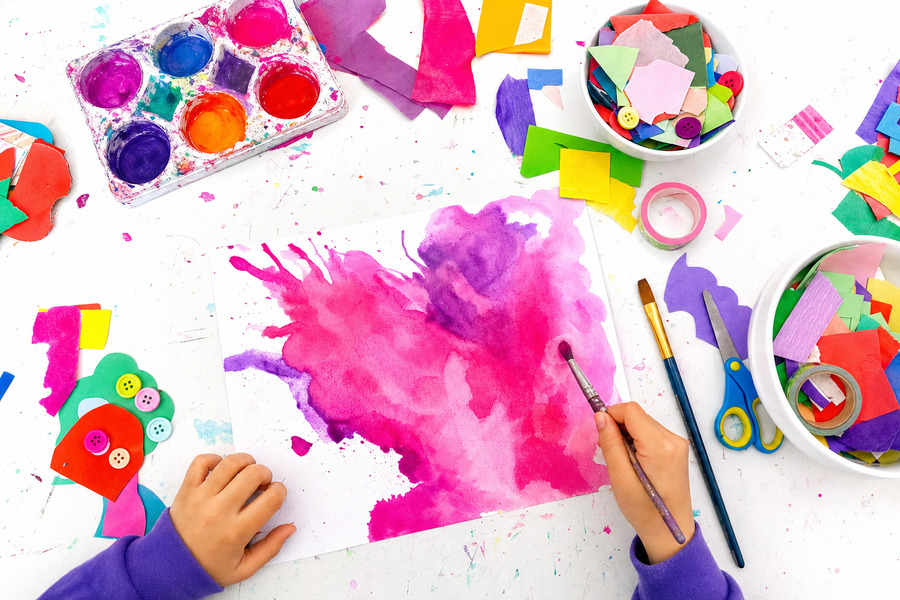
Wet-on-wet watercolour
You need: watercolours, cartridge paper, a brush, a cup of water.
- Wet the paper with clean water.
- Touch the brush to a colour and watch it spread.
- Add a second colour and see what happens.
Why it's good: kids see colour mixing for themselves, and there's no wrong answer.
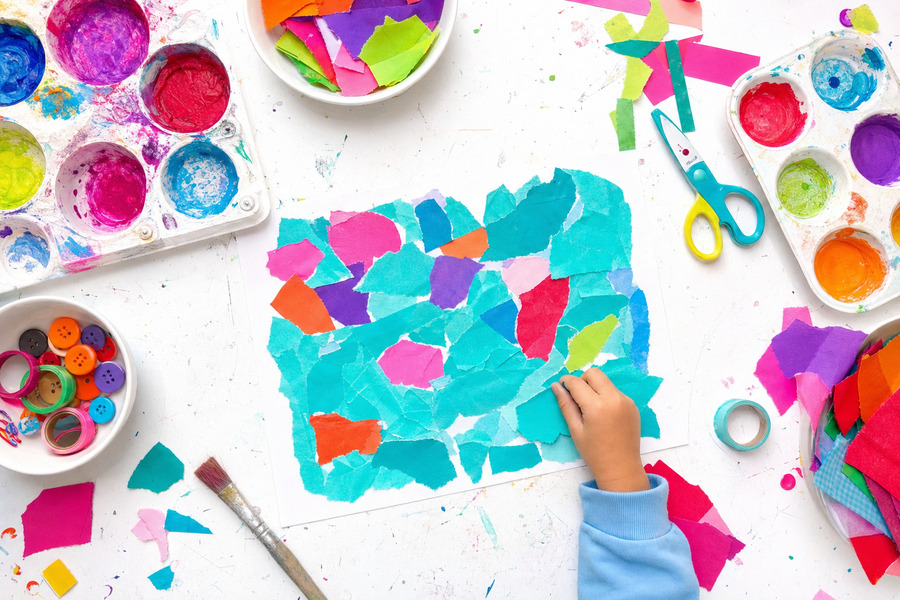
Newspaper tear collage
You need: newspaper, coloured paper, a glue stick or PVA.
- Tear the paper into small pieces.
- Sort them by colour or shape.
- Glue them onto a page to make an animal, a house or a pattern.
Why it's good: tearing builds finger strength, and the free newspaper keeps the cost down.
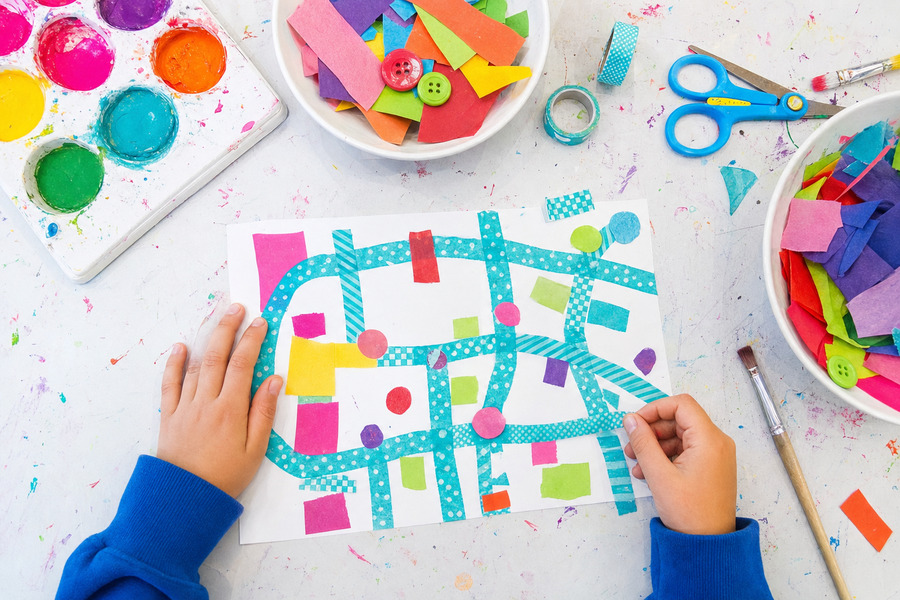
Washi tape roads
You need: washi tape, a table or the floor, small cars or toys.
- Make roads and parking spots with tape.
- Add bridges and tunnels from paper.
- Drive, play and peel it off after.
Why it's good: a quick set-up with no glue, and the tape peels off.
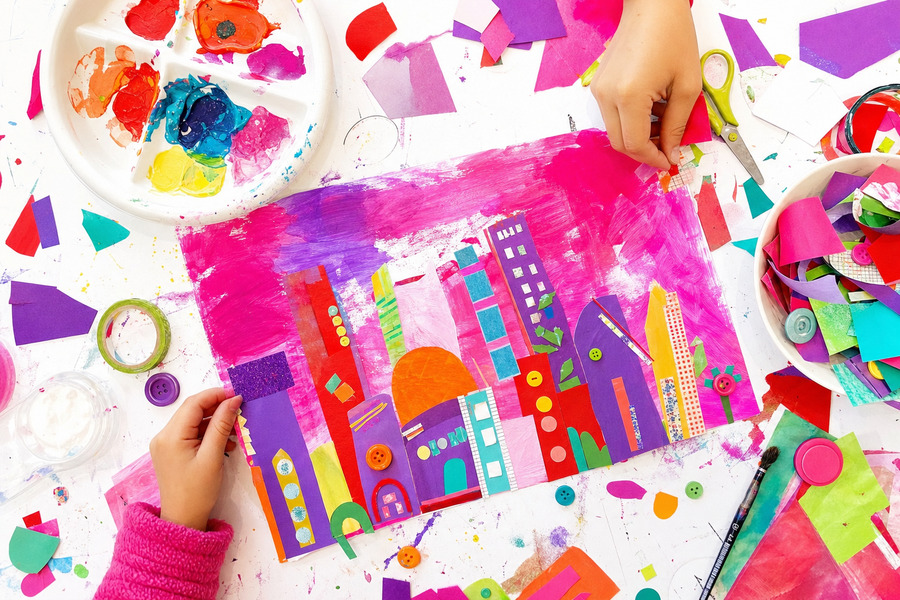
Box city
You need: boxes, tape, markers.
- Collect boxes of different sizes.
- Stack and tape them into buildings.
- Colour in windows and doors.
Why it's good: open-ended building that costs nothing.
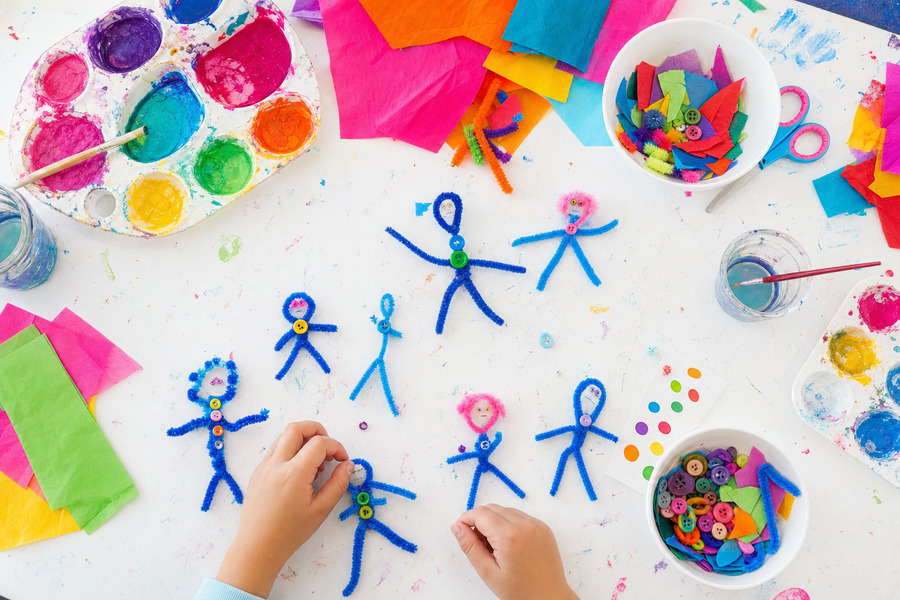
Pipe cleaner people
You need: pipe cleaners.
- Bend one into a body.
- Add arms and legs by twisting.
- Build a family, a pet or a monster.
Why it's good: bending and twisting strengthen small hands.
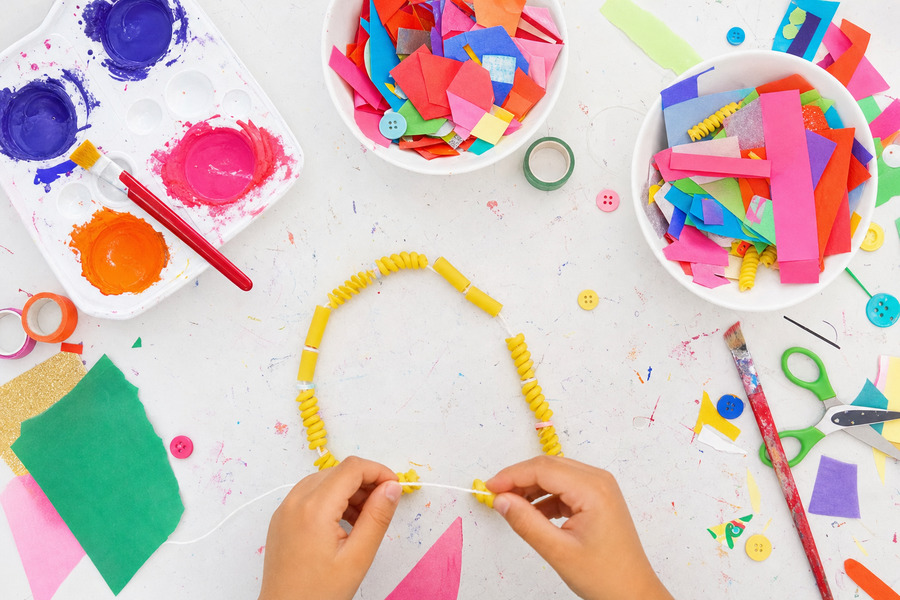
Pasta necklace
You need: penne or macaroni, a pipe cleaner.
- Thread the pasta onto the pipe cleaner.
- Make a pattern, such as red, white, red, white.
- Twist the ends together and wear it.
Why it's good: threading is good practice for hand and eye. <i>Stay close with pasta for children under 3.</i>
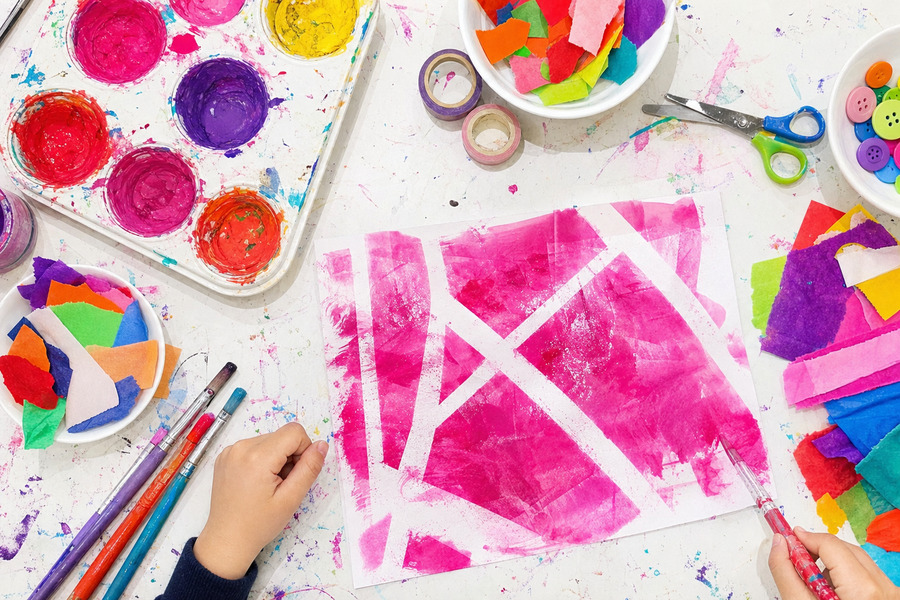
Tape resist painting
You need: washi tape, cartridge paper, watercolours.
- Stick tape in a pattern onto the paper.
- Paint over the whole page.
- Peel the tape off to reveal the white pattern.
Why it's good: it feels like magic and it's very forgiving.
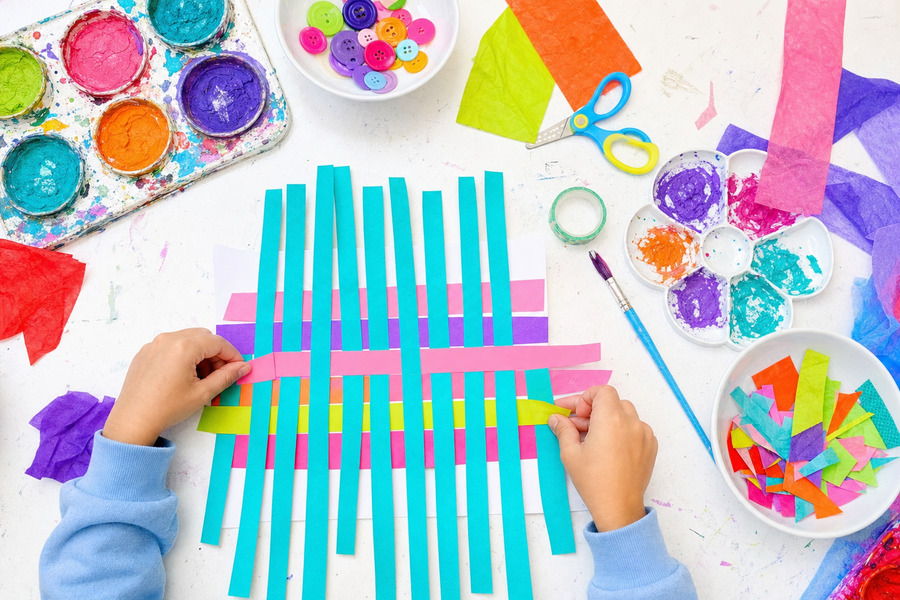
Paper weaving
You need: two colours of paper, scissors.
- Cut strips from one sheet.
- Fold a second sheet and cut slits, leaving the edge uncut.
- Weave the strips through the slits.
Why it's good: it builds patience and pattern skills.
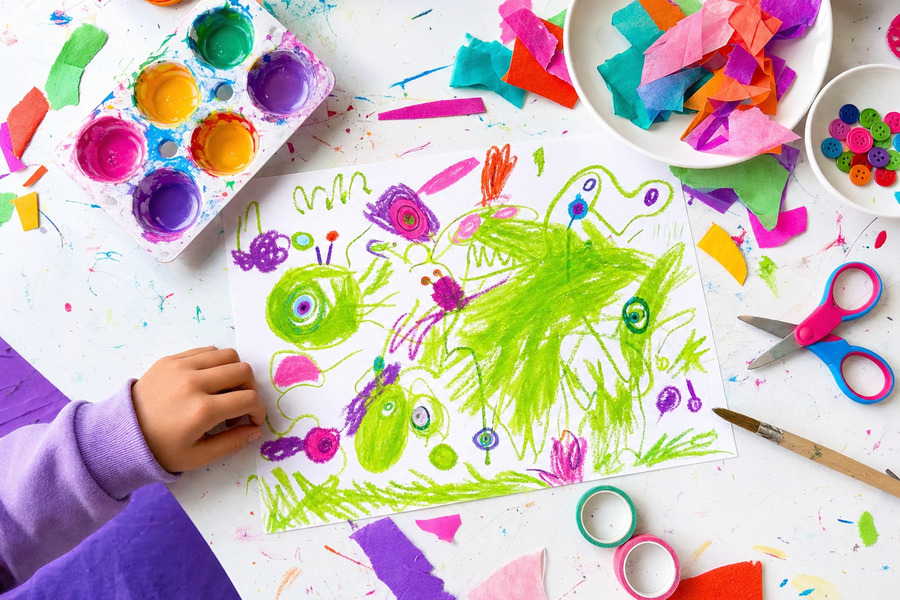
Scribble creatures
You need: paper, a crayon or marker.
- Draw a big scribble.
- Look for a creature hiding in it.
- Add eyes, legs and a name.
Why it's good: it turns a scribble into a story, and it works for any age.
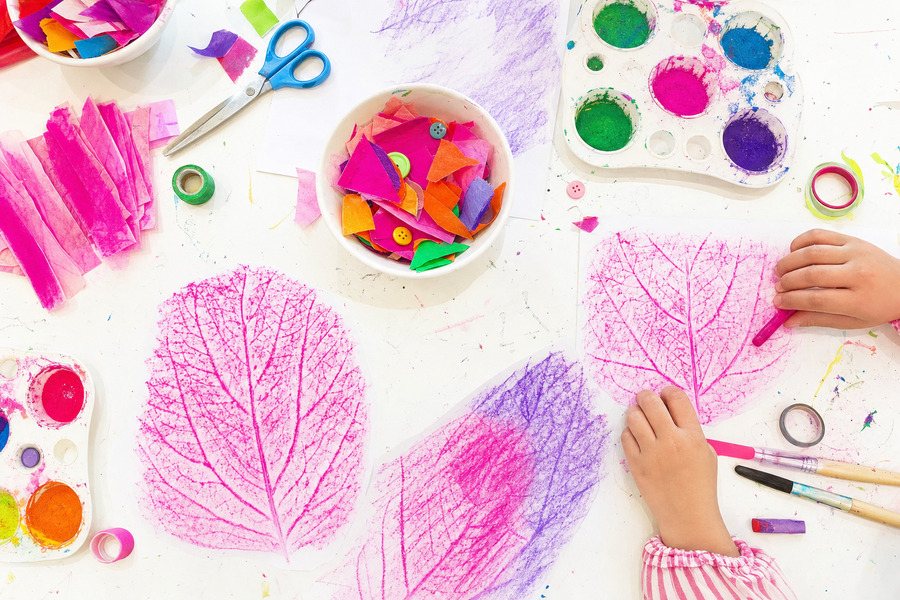
Crayon leaf rubbings
You need: leaves, thin paper, crayons.
- Put a leaf under the paper.
- Rub over it with the side of a crayon.
- Watch the leaf appear.
Why it's good: it's a cheap walk-and-make activity, and kids love the reveal.
You don't need more. You need these. Keep the supplies in one box where kids can reach them. The more easily kids can get at their supplies, the more they'll use them.
The teacher's why
Why simple supplies beat craft kits
A craft kit tells a child what to make. A pile of simple things lets them decide. Making decisions is where the thinking happens, and it's why children stay longer and feel prouder of what they've made.
Open-ended materials like paper, tape and boxes also grow with your child. A three year old tears the tape. A six year old builds a city with it.
Shopping guide
Buy this, not that
Set it up once
How to set up your art box
Pick one box
A shoebox or a basket with a lid. Everything lives here.
Keep it low
Put it where your child can reach it without asking.
Add paper to the top
Seeing paper is an invitation to start.
Refresh it once a month
Replace what ran out and take out what's boring.
Tips by age
What to expect at each age
Age 3
- Tearing, scribbling and big brushes
- Short sessions of five to ten minutes
- Stay close with pasta and small items
Age 4
- Snipping with scissors
- Layering paper and tape
- More talking about what they're making
Age 5 to 6
- Planning a bigger project
- Cutting and gluing with more control
- Drawing from observation
Common mistakes
Five things that backfire
From Valando
You've got the kit. Now learn what to do with it.
The Kitchen Table Method walks you through every session, step by step, with the exact words to say while they make.
Take the next step
Ready for the whole thing?
This guide gives you the ideas. The courses teach you how to run them, step by step, so it works on a real Tuesday.
The Kitchen Table Method
$139 once, yours for life
- Short audio lessons in my voice, to listen to while dinner cooks
- A ready-to-go activity and printable card for every session
- The exact words to say when it gets hard
The Method
$999 or $1,499 for your whole site
- Calm, confident art with three to six year olds
- Set-up, materials and the words to use, taught step by step
- 7-day money-back guarantee