The Art
Cupboard
What to buy, in what order, and what each thing is actually teaching. Twenty dollars covers everything you need for the first six months.
Written after years of watching which materials get used in the studio and which ones sit in a drawer. Free to read, nothing to sign up for.
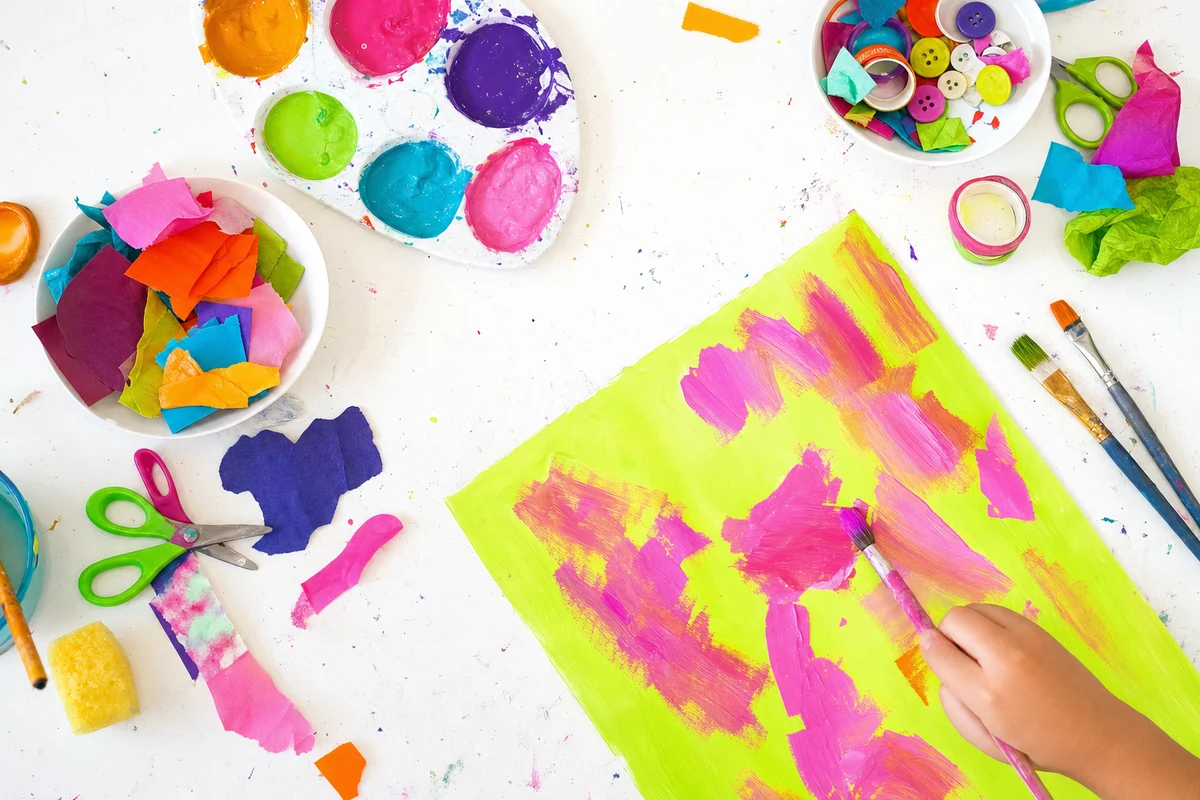
Start here
The cupboard is not the problem. The amount in it usually is.
Most families I meet already own more art supplies than we keep at the studio. A trolley with nine drawers, three sets of textas, glitter from a party, and a child who says there is nothing to do.
A tray with nine options on it looks generous to an adult and reads as a decision to a four year old, and it is a decision they cannot make yet. So they touch everything for two minutes and leave. One pot of paint and one odd tool will hold the same child for forty.
Buy the first list. Use it for a month.
Then buy the second list, and only then.
The third list is for when the first two are genuinely worn out.
Why the order, and not all at once. A child who meets five materials properly over a month will use all five. A child who meets fifteen in one afternoon has met none of them, and in a fortnight the lot is in a cupboard nobody opens.
From Valando
You've got the cupboard. Now learn how to use it.
The Kitchen Table Method shows you how to introduce every material and what to say, so what you buy actually gets used.
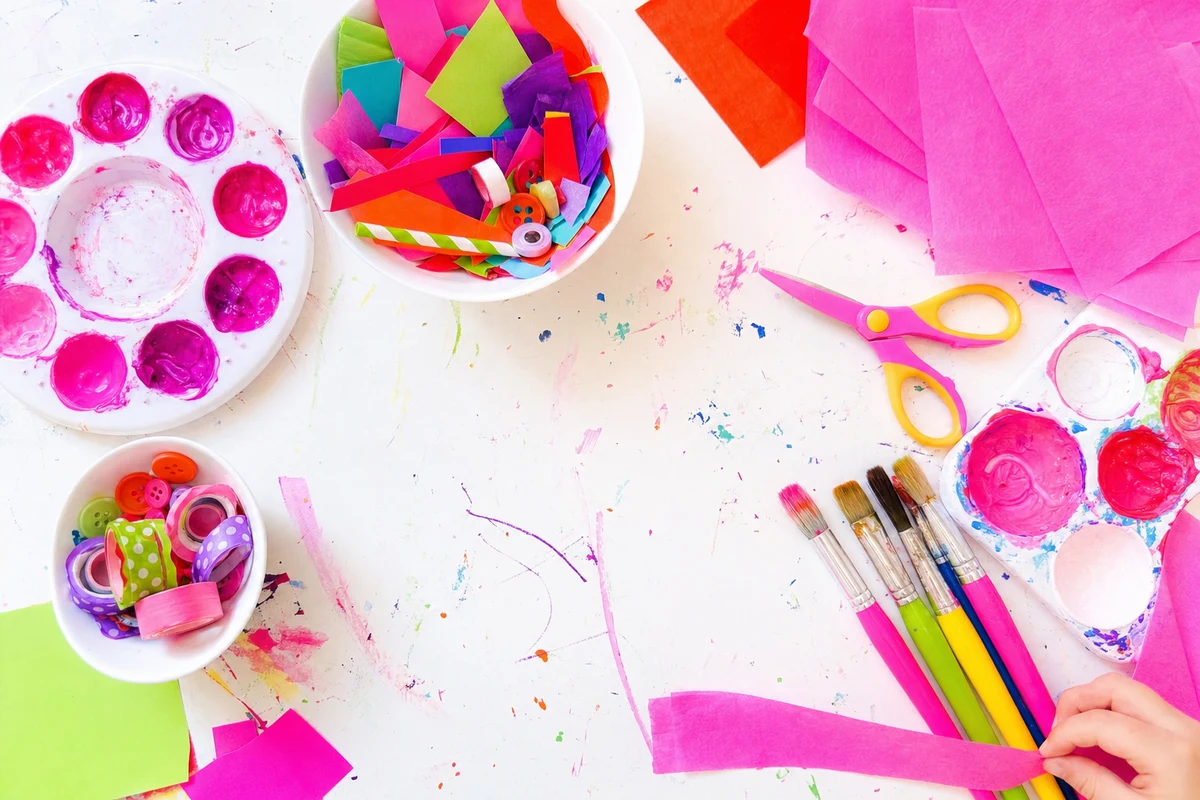
Under $20
The first list, and it is enough for months
Five things. If you buy nothing else on this page, this list runs every activity we do with three year olds.
Masking tape $2
The most useful thing in the cupboard, by a distance. It holds paper down so a three year old can draw with one hand instead of fighting the page with two. It tapes boxes together. It makes roads on the floor. Buy two rolls because one will disappear.
A glue stick $2
Not for sticking so much as for the decision of where to stick. Twist it down to almost nothing before you hand it over or a quarter of it goes in one sitting.
Thick paper or a drawing pad $5
Not printer paper. Printer paper tears under wet paint and a torn page ends the session. Cartridge paper or a cheap pad from the supermarket is enough. A cereal box cut flat is better than printer paper and free.
Five tubes of paint: red, yellow, blue, black, white $8
Those five make every colour there is. A set of twenty-four is cheaper per tube and teaches a child less, because when orange arrives in a pot the thinking never happens.
Cotton buds $2
A cotton bud can only be held one way, between the thumb and two fingers. That is the pencil grip, built without anybody mentioning a pencil.
Total, about $19. Every single thing on that list does something no other thing does. Nothing is there because it looks good in a photograph.
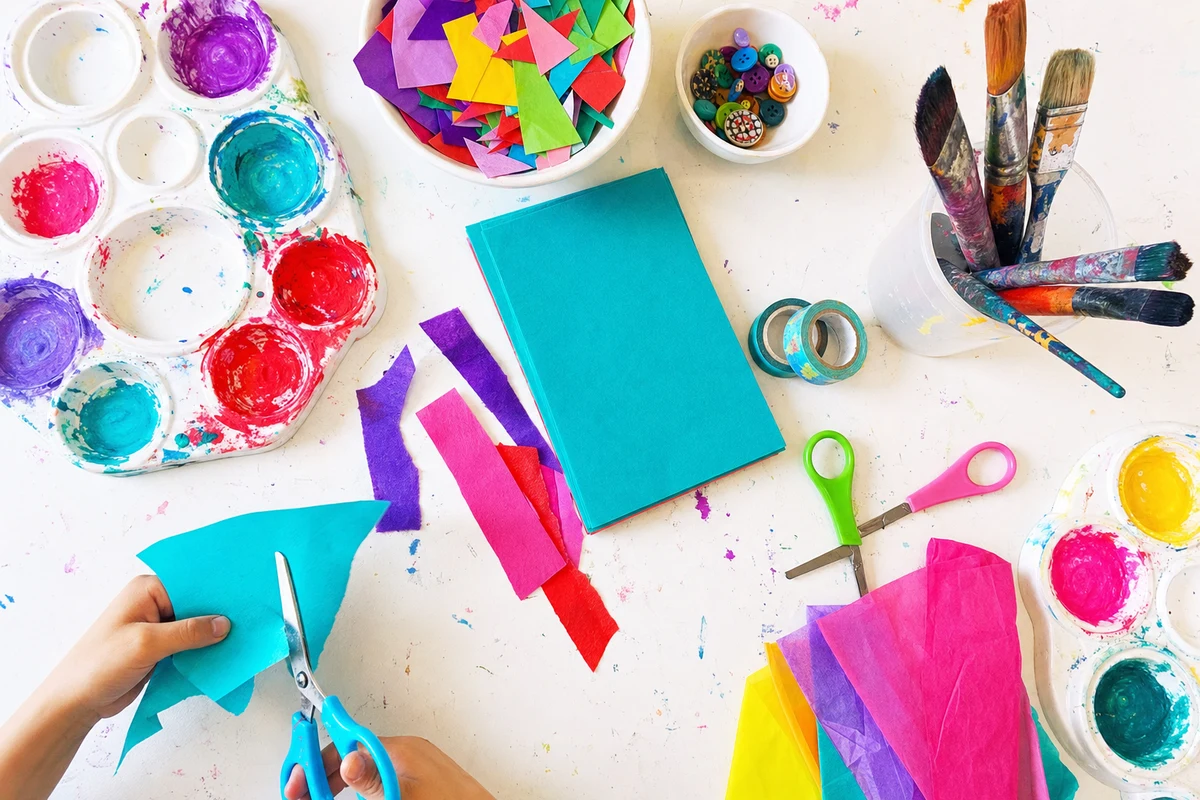
The next $20
Buy these after a month, not before
Now they know the first five, these five open up building, pressure and proper colour.
PVA or school glue $4
Where real building starts. It takes time to hold, and the waiting is the lesson. Pour a little into a small pot rather than handing over the bottle, and you control the flood instead of relying on their restraint.
Oil pastels $5
The fastest route to confident colour. Snap one in half in front of them on day one. The gasp is the point, and after that they press properly instead of being careful with your things.
Playdough, or make it $3
The strongest hands come from here. No cutters and no rolling pin, just the dough and a handful of dry pasta or bottle lids. This is the longest quiet concentration you will get all week.
Two or three cheap brushes, different widths $5
Different widths, not different qualities. A wide brush and a thin brush teach more than five identical ones, because choosing a tool is part of the work.
A few small pots or an ice tray $0
Whatever you have. Separate pots for separate colours, plus a plate each for mixing. Without a mixing plate the pot becomes the mixing plate and everything turns brown by Tuesday.
The one most families skip. Oil pastels. They look like the kind of thing you grow into, and they are actually the easiest entry point of anything here, because they need pressure rather than control and small children have plenty of pressure.
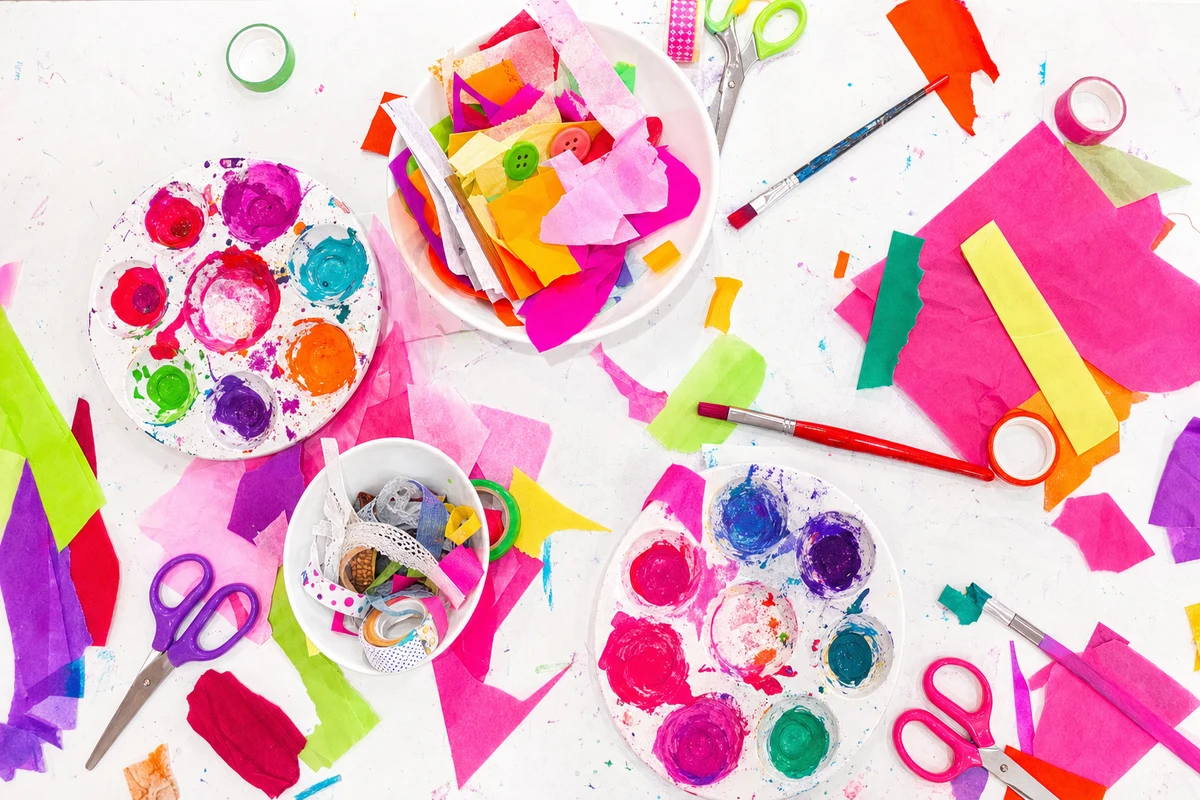
Nice to have
Only when the first ten are worn out
None of these are necessary. All of them are genuinely good, and the first one is better than its price suggests.
Packing tape $3
For the sticky wall. Tape a long loop sticky side out on a cupboard door at their height, put scraps in a bowl underneath, and leave it up for a week. Working upright builds the shoulder, and handwriting starts at the shoulder long before it reaches the fingers.
Watercolour paints, the cheap tin $6
Good for one thing specifically: salt drawings and anything where colour needs to run. Not a replacement for poster paint.
Pipe cleaners $3
The only thing on this list a child can bend and have it stay bent. That is a genuinely different lesson from everything else in the cupboard.
A hole punch $4
Underrated. Two hands, real resistance, instant visible result, and it quietly builds the hand strength that makes scissors possible.
Child scissors, the ones that actually cut $5
The blunt plastic ones that do not cut are the reason children hate scissors. Buy a real pair with rounded tips and sit with them instead.
If you only add one. Packing tape, for the sticky wall. It is three dollars, it needs nothing from you, and it is the most useful thing on this page for a child about to start school.
Save your money
Four things I would not buy again
Anything with a finished picture on the box
A kit has a right answer printed on the front, and a child can tell within about four seconds whether theirs is going to look like it. That is usually the moment it gets put down, and it is not boredom. It is comparison, and it is the fastest way to teach a child they are not artistic.
Colouring books
Not harmful, just not art. The decisions are all made before the child arrives. If they love them, keep them, and keep them separate from the cupboard so blank paper is still the normal thing.
The twenty-four colour paint set
It looks like better value and it removes the single most useful skill in early art, which is making a colour nobody gave you. Five tubes, mixed, beats twenty-four poured.
Glitter
I am not going to pretend this is pedagogical. It is in your carpet for two years and it teaches nothing that foil, cut small, does not teach better.
The part that decides everything
If they cannot reach it, you own the activity
A cupboard above the bench means every session starts with asking you, which means it starts when you have energy, which means it mostly does not start.
One low shelf, one basket, at their height. Paper in a flat pile where they can see it rather than in a drawer. Paint can stay up high, that one is fair. Everything else goes down.
This shelf is yours. You do not have to ask.
Everything has a home, and it goes back before you do.
Then hold the second one, every time, including when you are tired. That is the whole deal and it is the only rule the shelf needs.
The chair matters more than you would think. If their feet do not reach the floor and the table is at chest height, they will last four minutes and you will think they are not interested. A child needs to be stable through the body before the hands can do anything careful. Feet on the floor, elbows just above the table.
From Valando
You've got the cupboard. Now learn how to use it.
The Kitchen Table Method shows you how to introduce every material and what to say, so what you buy actually gets used.
Take the next step
Ready for the whole thing?
This guide gives you the ideas. The courses teach you how to run them, step by step, so it works on a real Tuesday.
The Kitchen Table Method
$139 once, yours for life
- Short audio lessons in my voice, to listen to while dinner cooks
- A ready-to-go activity and printable card for every session
- The exact words to say when it gets hard
The Method
$999 or $1,499 for your whole site
- Calm, confident art with three to six year olds
- Set-up, materials and the words to use, taught step by step
- 7-day money-back guarantee
I'm a qualified teacher. I studied teaching at Flinders University and taught in a primary school, from reception to year two, for about eight years. I now run an art studio for 3 to 6 year olds in Adelaide, I've written my own teaching method, and I'm a mum of three girls. Everything here is what I actually do, not theory.